Diagnostic Imaging

DEXA Bone Density Scan London — No GP Referral Needed

A DEXA scan is the gold-standard test for measuring bone density and diagnosing osteoporosis. At the London Osteoporosis Clinic, we arrange DEXA scans at trusted partner facilities across London — with full specialist interpretation of your results by Dr Taher Mahmud. No GP referral needed.

Key Takeaways
  • DEXA scanning is the most accurate method for diagnosing osteoporosis and measuring fracture risk.
  • LOC arranges DEXA scans at accredited partner facilities in London — no GP referral required.
  • Results are interpreted by a specialist in full clinical context, not just a radiographer report.
  • A scan is the starting point — LOC builds a complete, personalised bone health plan around your results.
The Procedure

What Is a DEXA Scan?

DEXA stands for Dual-Energy X-ray Absorptiometry. It uses two low-dose X-ray beams to measure the mineral density of your bones — most commonly at the hip and lumbar spine. The scan takes 10–20 minutes, involves no injections, no enclosed spaces, and the radiation dose is extremely low (equivalent to a few hours of natural background radiation).

Results are expressed as a T-score, which compares your bone density to that of a healthy young adult at peak bone mass:

T-score above −1.0: Normal bone density
T-score between −1.0 and −2.5: Osteopenia (low bone density, increased risk)
T-score below −2.5: Osteoporosis (significantly increased fracture risk)

A T-score alone does not tell the complete clinical story. At LOC, we combine your T-score with your FRAX fracture risk score, medical history, medication history, and lifestyle factors to build a picture that is meaningful to you — not just a number on a page.

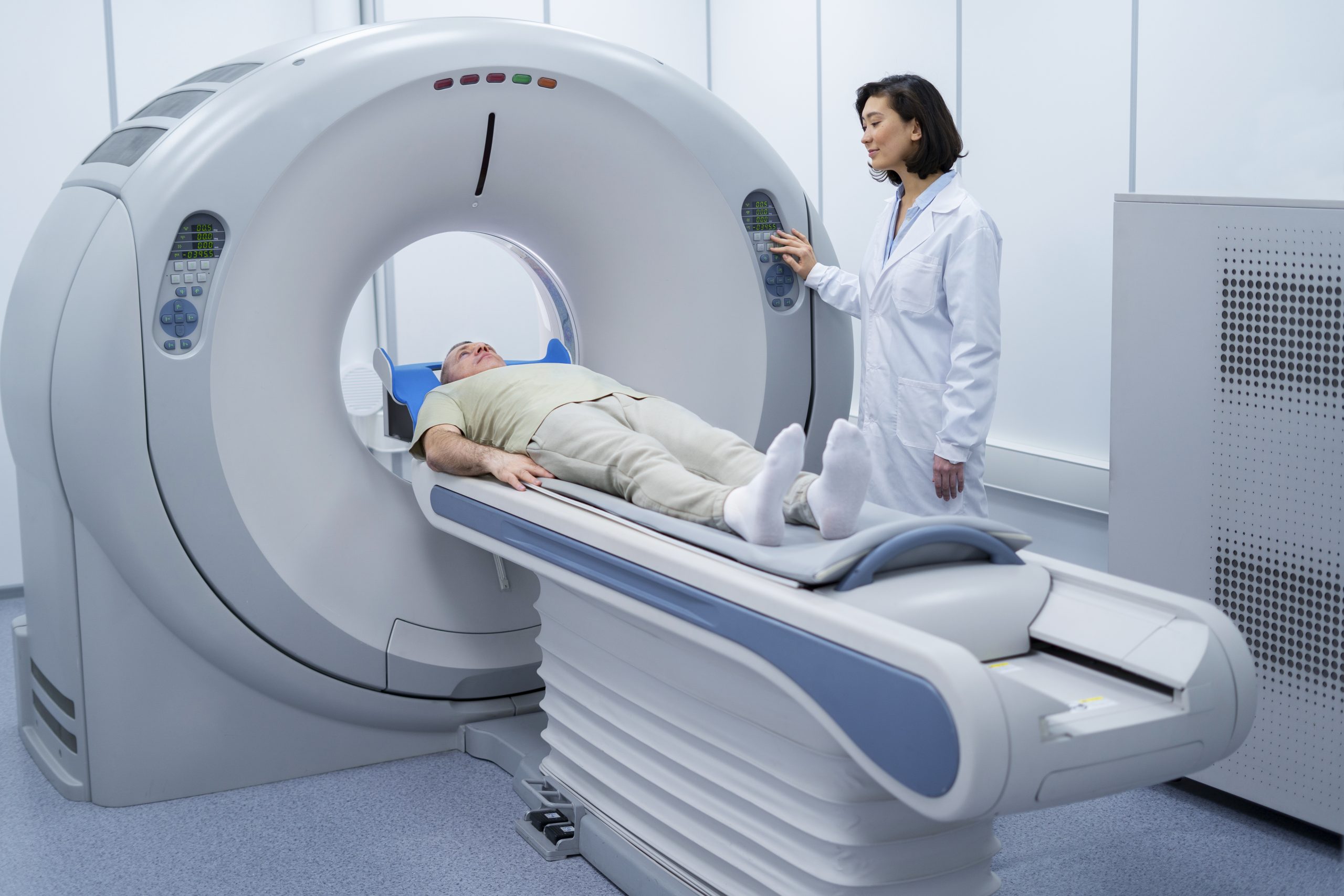
Radiologist preparing a patient for a DEXA bone density scan in London

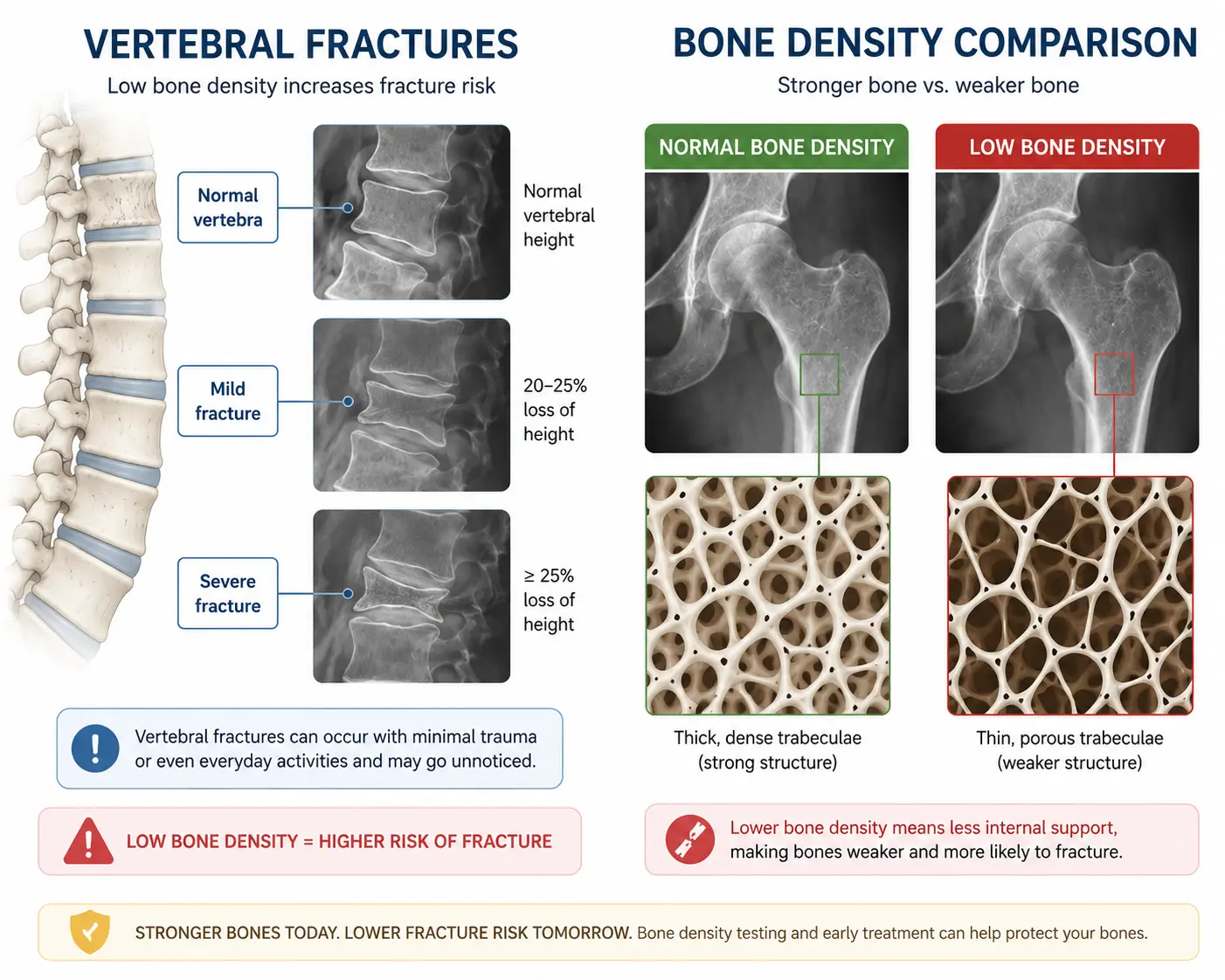
Bone density comparison showing normal bone versus osteoporotic bone structure

Indications

Who Should Have a DEXA Scan?

Clinical guidelines recommend a DEXA scan for anyone with significant risk factors for bone loss. You may need a scan if you:

Are a woman over 50 or have gone through the menopause
Have experienced a fragility fracture — broken a bone from a minor fall
Have taken corticosteroids for more than three months
Have a close family member with osteoporosis or hip fracture
Have a condition associated with bone loss (RA, coeliac, hyperthyroidism)
Have a low body weight (BMI under 19)
Are a man over 65 with additional risk factors
Have been on aromatase inhibitors or androgen deprivation therapy

If you are unsure whether you need a scan, a 30-minute initial consultation with Dr Mahmud will assess your individual risk profile and determine the right next step.

The Process

The LOC DEXA Scan Pathway

As a clinic dedicated entirely to bone health, we have built relationships with leading accredited imaging centres across London. Here is what the process looks like from first contact to treatment plan:

1

Initial Consultation

Dr Mahmud reviews your full medical history, symptoms, and risk factors. Where clinically indicated, he arranges a DEXA scan directly — no GP referral required, and no delay.

2

DEXA Scan at Partner Facility

We refer you to a trusted, accredited imaging centre in London. Appointments are typically available within one to two weeks. The scan itself is quick, painless, and takes approximately 10–20 minutes.

3

Specialist Results Review

Dr Mahmud reviews your DEXA report in full clinical context. You receive a clear, detailed explanation of what your T-score and FRAX fracture risk score mean for you personally — not a generic letter.

4

Personalised Treatment Plan

Where bone loss is identified, a structured plan is put in place immediately: targeted supplementation, exercise prescription, dietary optimisation, and medication where appropriate. We do not adopt a “watch and wait” approach.

5

Ongoing Monitoring

For patients with osteopenia or osteoporosis, repeat DEXA scans are scheduled at 1–2 year intervals to track treatment response and confirm bone density is improving over time.

Clinical Context

Why Specialist Interpretation Makes the Difference

A DEXA report from a radiographer tells you what the scanner measured. A consultation with a bone health specialist tells you what to do about it.

Many patients arrive at LOC having received a DEXA result from their GP with minimal explanation — sometimes just a letter saying the result was “normal” or “slightly low.” In many of these cases, full specialist review reveals a meaningfully elevated fracture risk that warrants active treatment.

Bone health is not a static condition. With the right intervention, bone density can be measurably improved. Research confirms that patients managed within specialist bone health services show significantly better treatment adherence and greater improvements in bone density compared to those managed through primary care alone.

At LOC, we have helped hundreds of patients across London reverse measurable bone loss. The DEXA scan is where that process begins.

The LOC View

“We regularly see patients who were told their DEXA results were ‘borderline’ or ‘fine for their age’ by their GP, only to discover on full specialist review that their 10-year fracture risk is high when all the clinical factors are considered together. A T-score is a number. What you actually need is someone who understands what that number means in the context of your life, your medications, your family history — and who will act on it.”

— Dr Taher Mahmud, Consultant Rheumatologist

Doctor at London Osteoporosis Clinic interpreting DEXA bone density scan results with a patient

Pricing & Queries

Cost & Frequently Asked Questions

DEXA Scan Cost in London

Private DEXA scan costs in London vary depending on the facility and whether a clinical consultation is included. At LOC, your DEXA scan is arranged as part of your overall bone health assessment. The imaging cost at our partner facility is separate from your consultation fee. Please call us on +44 (0)20 7193 7867 to confirm current consultation fees.

Many private health insurance policies cover DEXA scans when arranged by a specialist. We recommend confirming coverage with your insurer before booking. Our team is happy to advise on what documentation your insurer may require.

How long does a DEXA scan take?

The scan itself takes approximately 10–20 minutes. You remain fully clothed and lie on a flat padded table while the scanner arm passes slowly over your body. There are no injections, no enclosed spaces, and no preparation required. Most patients find the experience entirely comfortable.

Is a DEXA scan safe? How much radiation does it involve?

DEXA scans are extremely low dose. The radiation exposure is approximately 1–10 microsieverts — compared to around 80 microsieverts for a standard chest X-ray, and approximately 2,400 microsieverts of background radiation we all receive naturally every year. DEXA scanning is considered safe for repeated monitoring across all age groups.

Do I need a GP referral to get a DEXA scan in London?

Not through LOC. As a private specialist clinic, Dr Mahmud can arrange a DEXA scan directly following your initial consultation, based on clinical assessment. This avoids the delays associated with NHS GP referral pathways and ensures your scan is arranged at an appropriate accredited facility.

How often should I have a DEXA scan?

For individuals with normal bone density and low risk factors, a repeat scan every 3–5 years is generally sufficient. For patients with osteopenia or osteoporosis who are on active treatment, annual or biannual monitoring is recommended to track treatment response. Dr Mahmud will advise on the appropriate interval based on your individual situation and treatment progress.

Can a DEXA scan detect osteoporosis before it causes a fracture?

Yes — and this is one of its most important uses. DEXA can detect bone loss at the osteopenia stage, before full osteoporosis develops and before any fractures have occurred. Early detection means earlier intervention, and earlier intervention consistently produces better outcomes. If you have risk factors, waiting for a fracture before investigating is not a strategy we recommend.
Start Your Pathway

Book a Bone Health Assessment

Your journey to stronger bones begins with a comprehensive consultant review.

Book Consultant Assessment →

or call +44 (0)20 7193 7867 (Mon–Fri, 9am–5pm)

Reviewed by Dr Taher Mahmud, Consultant Rheumatologist & Bone Health Specialist

×