

Introduction: Why So Many People Miss the Right Test at the Right Time
Margaret was 62 when she fractured her wrist after a simple slip in her kitchen. She was told it was “just bad luck.” No bone health assessment was offered. Two years later, she suffered a spinal compression fracture — and only then was osteoporosis diagnosed.
Key Takeaways
- Gold Standard: DEXA scans are the most accurate way to measure bone density and predict fracture risk.
- London Location: We provide private DEXA scanning at 9 Harley Street, London, with same-day reports available.
- Expert Review: Unlike standard screenings, our scans include a review by a Consultant Rheumatologist to explain your T-score.
- Safety First: The radiation dose is extremely low—less than a standard chest X-ray or a transatlantic flight.
Stories like Margaret’s are far more common than they should be.
Despite clear national and international guidance, fewer than 2 in 10 people who should be investigated after a fragility fracture ever receive a bone density scan. Osteoporosis is often silent until the first fracture occurs — and by then, bone strength has already been compromised.
A DEXA scan (also called a DXA scan) is the single most useful test for diagnosing osteoporosis and assessing fracture risk. It is quick, painless, low-radiation, and widely recommended — yet still under-used.
In this guide, we explain:
- What a DEXA scan is and how it works
- Who should have a bone density scan — and when
- When a DEXA scan may not be appropriate
- How this test fits into a personalised bone-health strategy
Why DEXA Scans Matter for Bone Health
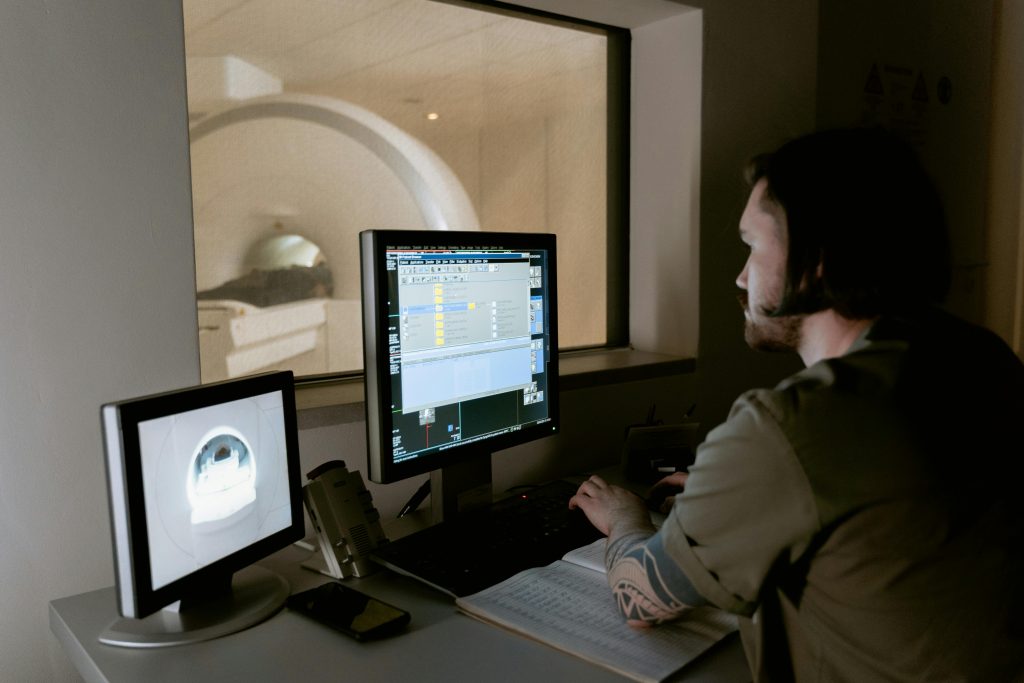
Osteoporosis is a clinical diagnosis, not simply a number on a report. However, the DEXA scan remains the gold-standard investigation for measuring bone mineral density (BMD) and identifying fracture risk before serious harm occurs.
What makes a DEXA scan so important?
- It detects low bone density before fractures happen
- It helps classify bone health as:
- Normal
- Osteopenia (low bone mass)
- Osteoporosis
- It allows clinicians to assess future fracture risk, not just current bone status
- It guides decisions about treatment, lifestyle changes, and monitoring
At London Osteoporosis Clinic, we use DEXA scanning as part of a whole-system approach — integrating:
- Clinical history
- Hormonal and metabolic factors
- Muscle strength and balance
- Nutrition, lifestyle, and fall risk
This philosophy reflects growing evidence that bone strength is influenced by far more than calcium intake alone.
What a DEXA scan does not do
A DEXA scan does not:
- Diagnose pain causes
- Predict fractures in isolation
- Replace clinical judgement
Instead, it provides critical objective data that supports a personalised prevention or treatment plan.
Early identification of bone loss allows timely intervention — often before medication is required.
What Is a DEXA Scan?
A DEXA (Dual-Energy X-ray Absorptiometry) scan is a simple imaging test that measures bone mineral density, usually at the hip and spine.
What to expect
- You lie flat on an open X-ray table
- A scanning arm passes gently over your body
- The test takes 10–15 minutes
- No injections, needles, or enclosed spaces
Preparation
- No fasting required
- You may remain clothed (avoid metal fastenings)
- Avoid calcium supplements on the day of the scan
Radiation exposure is very low — significantly less than a CT scan and comparable to natural background radiation over a short period.
Who Should Have a DEXA Scan?
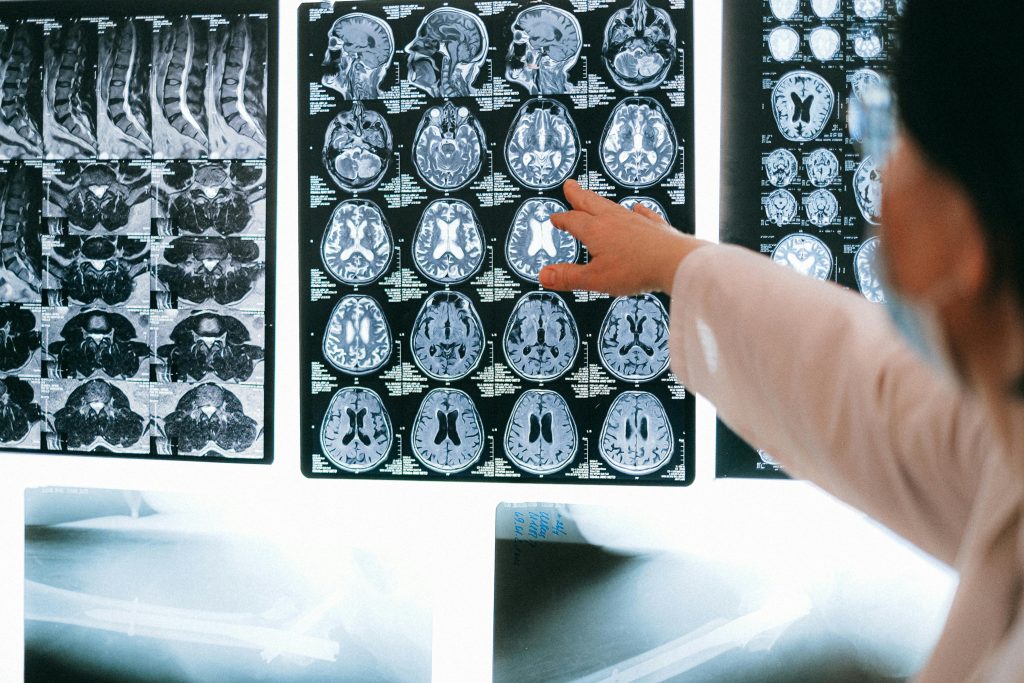
Routine age-based screening
- All women aged 65 and over
- All men aged 70 and over
This applies even if you feel well and have never fractured.
Women under 65 with additional risk factors
Women should consider earlier scanning if they have:
- Early or premature menopause (before age 45)
- Peri-menopausal or post-menopausal oestrogen deficiency
- Long gaps in menstruation (amenorrhoea >12 months under age 42)
- A maternal history of hip fracture after age 50
Men and women of any age with fractures
- Any fragility fracture (from a fall at standing height or less)
- Vertebral compression fractures seen on X-ray or MRI
Medical conditions associated with bone loss
- Rheumatoid arthritis
- Hyperthyroidism
- Inflammatory bowel disease
- Growth hormone deficiency
- Osteogenesis imperfecta
Medication-related risk
Long-term use of medications known to affect bone density, including:
- Oral steroids (e.g. Prednisolone >5 mg for >3 months)
- Anti-epileptic medications
- Aromatase inhibitors
- Anticoagulants (warfarin, heparin)
- Thyroxine (if over-replaced)
- Proton pump inhibitors
- Certain cancer therapies
Lifestyle and nutritional risk factors
- Low BMI (<18 kg/m²)
- Significant unintentional height loss (>2 cm)
- Severe malnutrition or restrictive diets
- Smoking history
- Excess alcohol intake
- Excessive exercise with inadequate calorie intake
Do you fit any of these criteria?
Don’t wait for a fracture to find out your bone density.
If you have risk factors, early detection is your best defence. The London Osteoporosis Clinic offers private, consultant-led DEXA scans with same-day results.
When a DEXA Scan May Not Be Appropriate
A DEXA scan may be postponed or avoided in certain situations:
- Pregnancy
- Recent use of contrast agents or radionuclide studies
- Severe spinal arthritis or deformity affecting accuracy
- Inability to lie still or achieve correct positioning
- Extreme body weight (very high or very low), which may affect precision
In these cases, alternative assessment strategies may be discussed.
What Your Results Mean
DEXA results are reported as T-scores:
- Normal: above –1
- Osteopenia: –1 to –2.5
- Osteoporosis: –2.5 or below
However, numbers alone are not the full story. At London Osteoporosis Clinic, results are interpreted alongside:
- Fracture history
- Hormonal status
- Muscle strength
- Nutritional markers
- Falls risk
This ensures treatment decisions are individualised, not automatic.
Conclusion: Early Testing Prevents Preventable Fractures
A DEXA scan is not just a diagnostic test — it is a window into future fracture risk. For many people, timely scanning can mean the difference between prevention and avoidable injury.
If you:
- Have fractured after a minor fall
- Are approaching or past menopause
- Take medications that affect bone health
- Have risk factors you recognise in this guide
…then a bone density assessment may be appropriate.
Book a DEXA Assessment
👉 Book your bone health consultation or DEXA scan at London Osteoporosis Clinic
Early assessment allows earlier action — and stronger bones for the future.

