
Osteoporosis Symptoms

Osteoporosis is often a silent condition with no symptoms in the early stages. In many individuals, the first sign is a fracture occurring after minimal trauma.

Early identification of bone loss allows timely intervention, monitoring, and prevention of avoidable fractures and loss of independence. This preventive approach supports long-term bone strength, mobility, and independence.

At the London Osteoporosis Clinic, emphasis is placed on early risk identification, comprehensive assessment, and longitudinal monitoring to reduce fracture risk before symptoms develop.

Research evidence shows that diagnosis is often only made after one or more fractures have already occurred. Treatment may then be delayed, incomplete, or of inappropriate duration. Osteoporosis frequently remains silent until a fracture occurs.

Osteoporosis is silent until a fracture occurs.  In the UK there are more than 524,000 osteoporosis fractures every year, with more than 1,150 deaths every month (Royal Osteoporosis Society); with survivors experiencing ongoing pain and restricted activities.

Are you at risk of osteoporosis? Find out here

Osteoporosis develops gradually over many years and may remain undetected until bone strength has significantly declined. This is why proactive bone health assessment is important, particularly in individuals with recognised risk factors, even in the absence of symptoms.
Signs and symptoms in adults

There are typically no symptoms in the early stages of bone loss. But once bones have been weakened by osteoporosis, you may have signs and symptoms that include:

  • Back pain, caused by a fractured or collapsed vertebra
  • Loss of height over time
  • A stooped posture
  • A bone fracture that occurs much more easily than expected
  • These symptoms typically occur in more advanced stages of bone loss, which is why early bone health assessment is essential even in the absence of symptoms.

Osteoporosis develops gradually over many years and is often not recognised until bone strength has already been significantly reduced. This is why proactive bone health assessment and monitoring are important, particularly in individuals with risk factors, even when there are no obvious symptoms.

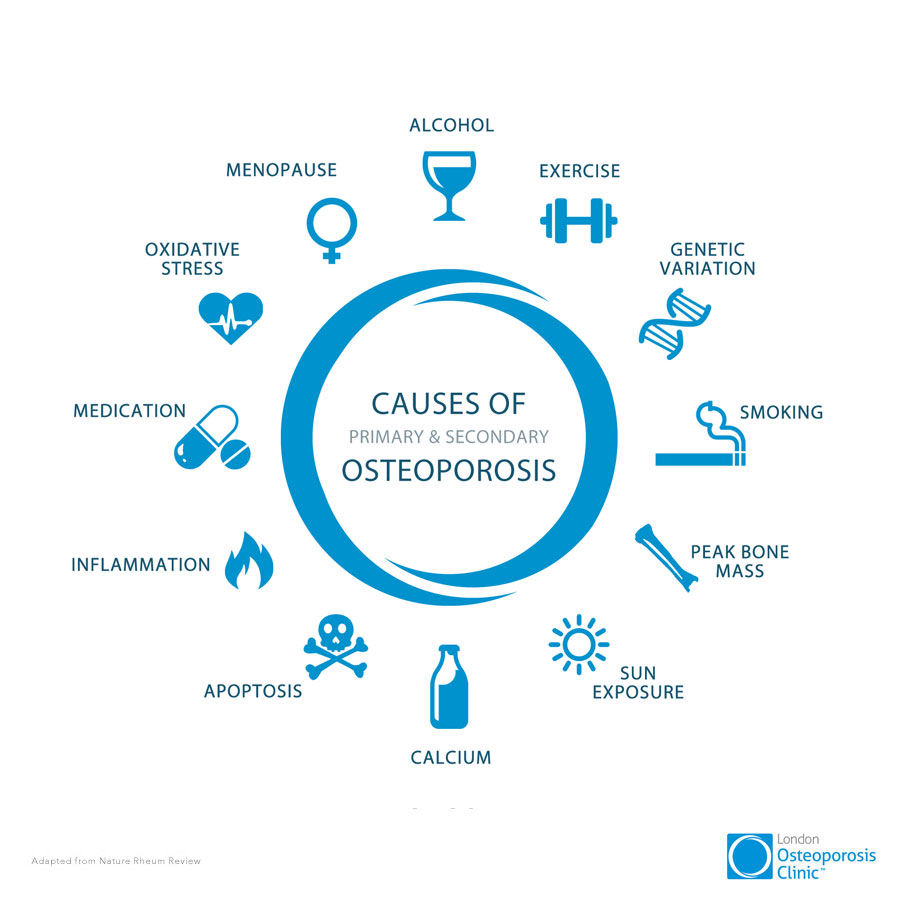
Causes of Osteoporosis

Bone is a living tissue that is continuously renewed throughout life. In younger years, new bone formation exceeds bone breakdown, allowing bone mass to increase. With ageing, this balance gradually shifts, and bone loss can occur faster than new bone is formed, leading to reduced bone strength over time.

Most people reach their peak bone mass by their early 30s.  With age, bone mass is lost faster than it is created.

How likely you are to develop osteoporosis depends partly on how much bone mass you attained in your youth and early adulthood.  The higher your peak bone mass, the less likely you are to develop osteoporosis as you age.


Comprehensive infographic detailing lifestyle and health factors contributing to bone loss.
×