
Key Takeaways
- Distinct Conditions: Osteoporosis is a silent metabolic bone disease (fragility), while arthritis affects the joints (pain and inflammation).
- The Inflammatory Link: Inflammatory arthritis (like RA) doubles the risk of osteoporosis due to systemic inflammation and medication use.
- Osteoarthritis vs. Osteoporosis: Osteoarthritis is degenerative “wear and tear” and does not inherently increase osteoporosis risk, unlike inflammatory types.
- Co-existence: It is possible, and common, to have both conditions simultaneously, requiring a coordinated treatment approach.
Recently, I was speaking with Neeta, one of the yoga teachers who supports our training programmes at the London Osteoporosis Clinic. She raised a question that many patients – and indeed professionals – often ask:
“It’s not always obvious what arthritis someone has, or how it relates to osteoporosis. How do these conditions differ, and how do they overlap?”
It’s an excellent question because while these conditions are frequently mentioned together, they are not the same, and their relationships are often misunderstood. Let’s gently untangle them.
Osteoporosis: A Metabolic Bone Condition

Osteoporosis is a metabolic bone disease. It involves a gradual loss of bone strength over time, making bones more fragile and more prone to fracture. Unlike arthritis, which you can feel, osteoporosis often develops silently, without symptoms, until a fracture occurs.
Bone health is influenced by a wide range of factors, including:
- Nutrition (particularly calcium, protein, vitamin D – see our guide to nutrition for joint health)
- Physical activity and muscle strength
- Hormones and ageing
- Genetics
- Medical conditions
- Certain medications (notably steroids)
Inflammatory Arthritis: A Driver of Bone Loss
Inflammatory arthritis (such as rheumatoid arthritis and other autoimmune arthritides) is a condition in which the immune system drives ongoing inflammation in the joints – and sometimes beyond.
This type of arthritis is a direct risk factor for osteoporosis. It:
- Doubles the risk of osteoporosis
- Accelerates bone loss through inflammation itself (systemic effects)
- Often requires medications (like corticosteroids) that can further weaken bone if used long-term
In other words, inflammatory arthritis is not just a joint condition — it has systemic effects, including on bone health.
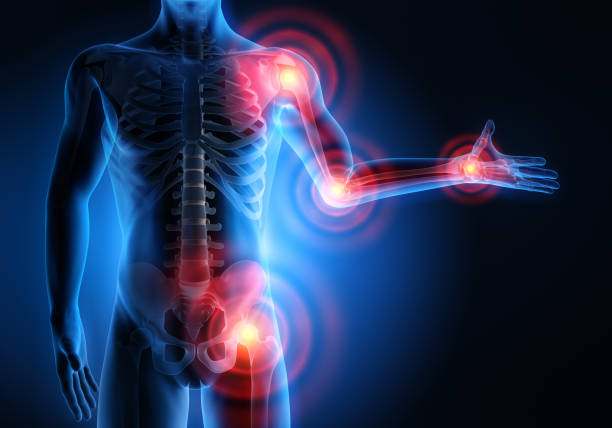
Osteoarthritis: A Different Condition Altogether
Osteoarthritis, by contrast, is a degenerative joint condition often described as “wear and tear.”
Key distinctions:
- It is not primarily inflammatory
- It does not inherently double osteoporosis risk
- In some ways, it represents the opposite biological environment to inflammatory arthritis
Osteoarthritis relates to joint wear, structural change, cartilage degeneration, and local mechanical factors. It is very common, particularly with ageing, previous injury, or altered biomechanics. (Read more about new research connecting osteoporosis treatments to osteoarthritis).
How These Conditions Can Interact
This is where things become more nuanced – and more interesting.
- Someone with inflammatory arthritis may later develop osteoarthritis as joints change over time.
- Osteoporosis may improve if underlying drivers are removed — for example, stopping long-term steroid use or optimising nutrition and exercise.
- Inflammatory arthritis can flare and settle, while osteoarthritis symptoms can fluctuate day to day.
It is entirely possible to have more than one of these conditions at the same time. The body is not siloed. These processes can evolve, overlap, and influence one another across years.
The Most Important Takeaway: Assessment

If there is uncertainty, change, or progression in symptoms, the most sensible step is not guesswork — it is proper assessment.
Conditions such as osteoporosis, inflammatory arthritis, and osteoarthritis change over time, require different monitoring strategies, and benefit from periodic reassessment rather than one-off opinions.
At the London Osteoporosis Clinic, we take a whole-person, longitudinal approach, recognising that bone, joints, muscles, and metabolism are deeply interconnected.
In Summary
- Osteoporosis: a metabolic bone disease.
- Inflammatory arthritis: increases osteoporosis risk significantly.
- Osteoarthritis: a separate, non-inflammatory joint condition.
If you’re curious, concerned, or simply want clarity about your bone or joint health, a structured review can be profoundly reassuring — and empowering.

