
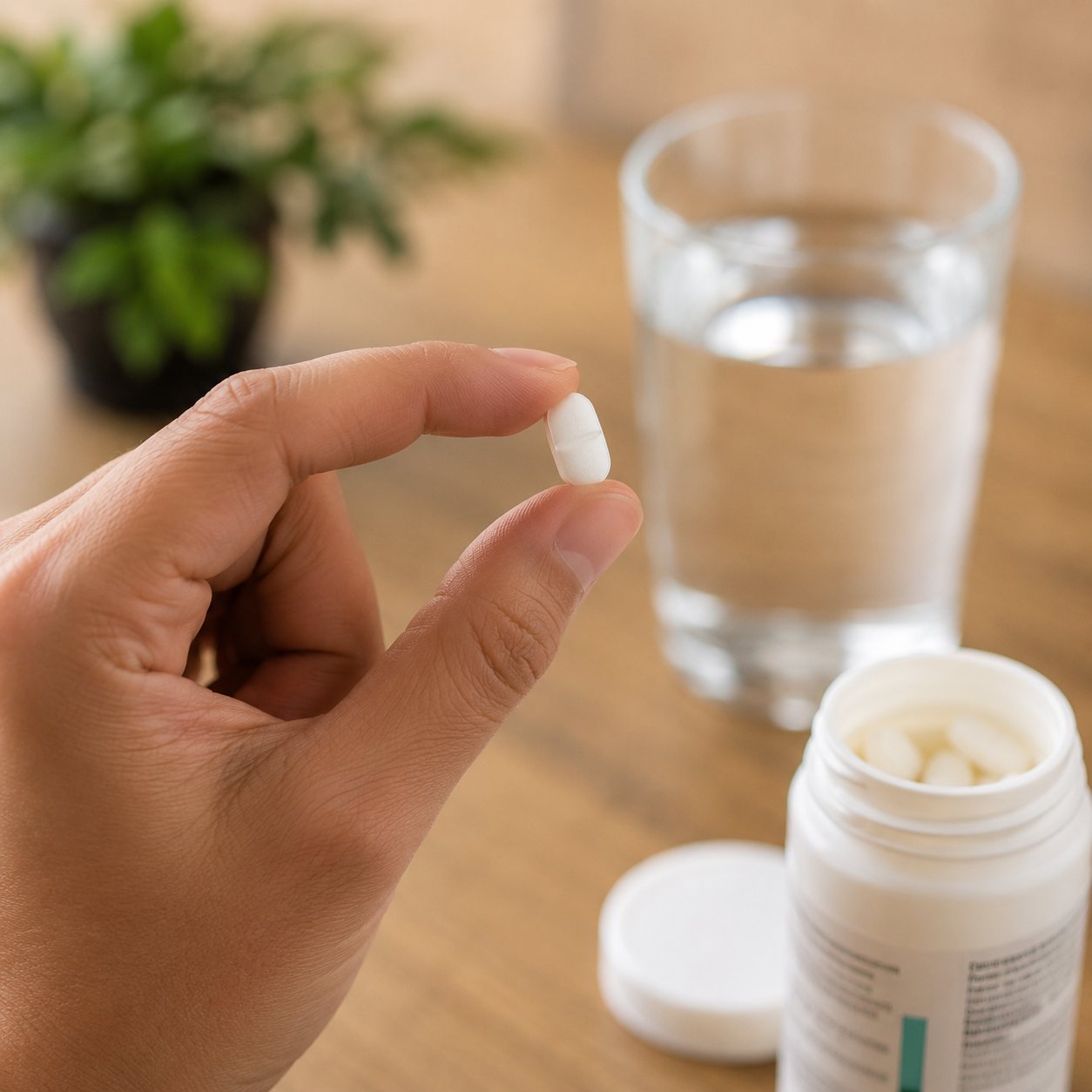
Most people on bisphosphonates for osteoporosis have no side effects worse than mild heartburn, and even that usually settles once dosing is done correctly. The rare but serious risks you may have read about — jaw problems, unusual thigh fractures — are real but uncommon, and knowing the actual numbers (not just the headlines) helps you weigh the risk of treatment against the much larger risk of an untreated fracture.
- Common side effects — heartburn, acid reflux, and stomach upset — affect a minority of people and are often fixable with correct dosing technique
- Serious side effects are rare: osteonecrosis of the jaw occurs in roughly 1 in 10,000–100,000 osteoporosis patients per year
- Atypical femoral fractures are also rare (around 3.2 to 50 cases per 100,000 person-years, rising with treatment duration) and are why long-term use is periodically reviewed
- An IV infusion can avoid the gastrointestinal side effects tablets cause
- Stopping treatment isn’t the only alternative — dose timing changes, switching drug class, or a supervised “drug holiday” are all options worth discussing first
- The fracture risk from stopping treatment usually far outweighs the risk of continuing it — this is a conversation to have with a specialist, not a decision to make alone
If you’ve just started osteoporosis treatment or are hesitating before you do, it’s worth separating what’s common and manageable from what’s rare and serious — and understanding your actual alternatives if a bisphosphonate doesn’t suit you.
How bisphosphonates work — and why side effects happen
Bisphosphonates (alendronic acid, risedronate, ibandronic acid, and IV zoledronic acid) slow down osteoclasts — the cells that break down old bone — so that bone-building keeps pace with bone loss. Most side effects relate to how the drug is absorbed and processed, not to bone itself. Oral tablets are notoriously poorly absorbed (as little as 1% of the dose) and can irritate the oesophagus if they don’t pass through quickly, which is why dosing instructions are so specific.

Common side effects (and how to manage them)
- Heartburn and acid reflux — the most frequent complaint with oral bisphosphonates. Taking the tablet with a full glass of plain water, on an empty stomach, then staying upright for 30–60 minutes (60 for ibandronic acid) prevents most cases
- Stomach pain or nausea — usually mild and often improves after the first few doses
- Muscle and joint aches — can occur with any bisphosphonate, tablet or infusion, and typically settles over days to weeks
- Flu-like symptoms after an infusion — specific to IV zoledronic acid, affecting roughly a third of people after their first dose, far less common afterwards (see our guide to bone infusion treatment for detail)
If heartburn persists despite correct technique, this is worth raising rather than simply stopping the medication — switching to a different bisphosphonate, a less frequent dosing schedule, or an infusion instead of tablets often resolves it.
The two side effects everyone asks about
Osteonecrosis of the jaw (ONJ)
This is a rare condition where an area of jawbone fails to heal, most often triggered by invasive dental work (extractions, implants) rather than occurring spontaneously. At osteoporosis treatment doses, the risk is low — estimated between 1 in 10,000 and 1 in 100,000 patients per year, considerably lower than the risk seen with the much higher doses used in some cancer treatments. Good dental hygiene, and having any planned invasive dental work done before or well clear of starting treatment, further reduces this risk.
Atypical femoral fractures (AFF)
These are unusual fractures of the thigh bone that occur with minimal or no trauma, sometimes preceded by weeks of dull thigh or groin pain. They’re strongly associated with long-term bisphosphonate use (typically beyond 3–5 years) and are rare — estimates range from roughly 3.2 cases per 100,000 person-years in early treatment to around 50 per 100,000 after 8+ years. This risk is exactly why treatment duration is reviewed periodically rather than continued indefinitely without reassessment, and why new thigh or groin pain during treatment should always be reported.

Putting the risk in context
These numbers are easiest to understand side by side. Without treatment, a woman with osteoporosis has a significantly elevated lifetime risk of a hip fracture — an injury with a roughly 20–25% one-year mortality rate in older adults, and one that frequently ends independent living. Against that, the risk of a serious bisphosphonate side effect is measured in single-digit or low double-digit cases per 100,000 patient-years. For the overwhelming majority of people, the fracture prevented by treatment far outweighs the rare harms of treatment itself — but “overwhelming majority” isn’t “everyone,” which is why individual risk assessment matters.
The patients most anxious about bisphosphonates are usually the ones who’ve read about jaw problems or thigh fractures online without the context of how rare they actually are, or how much higher their fracture risk is if they stop treatment altogether. Our job isn’t to dismiss those concerns — they’re valid risks — but to walk through your specific numbers: your bone density, your fracture history, how long you’ve been treated, and what your realistic alternatives are. If a bisphosphonate genuinely isn’t right for you, there are other options within a properly structured treatment pathway. Book an appointment before stopping any treatment on your own — an unsupervised stop is often riskier than the side effect you’re trying to avoid.
Alternatives if bisphosphonates aren’t right for you
- Switch delivery method — moving from oral tablets to a yearly infusion (or vice versa) resolves GI-related intolerance for many people
- Switch drug class — denosumab works differently and doesn’t carry the same GI side effects, though it has its own considerations, including the need for strict dosing continuity
- Anabolic (bone-building) treatments — for people at very high fracture risk, drugs that build new bone rather than just slowing loss may be considered as a first step
- Supervised drug holiday — for lower-risk patients who’ve completed several years of treatment, a monitored pause is sometimes appropriate rather than indefinite continuation
None of these should be self-directed. The right alternative depends on your DEXA results and fracture risk profile, which is why this is a specialist conversation rather than a switch to make on your own.
When to contact your doctor urgently
- New or worsening jaw pain, swelling, or exposed bone in the mouth, especially after dental work
- New dull thigh or groin pain during long-term treatment
- Severe or worsening chest pain, difficulty or pain on swallowing after taking a tablet
- Signs of a severe allergic reaction after an infusion (rare, but treated as an emergency)
Frequently Asked Questions
Can I just stop taking my bisphosphonate if I get side effects?
Don’t stop without talking to your clinical team first. For most bisphosphonates, stopping abruptly isn’t dangerous the way it can be with denosumab, but doing so removes the fracture protection the drug provides. It’s almost always better to address the side effect — through dosing changes, a different bisphosphonate, or a different delivery method — than to stop treatment altogether.
How common is osteonecrosis of the jaw really?
At osteoporosis treatment doses, it’s estimated to affect roughly 1 in 10,000 to 1 in 100,000 patients per year — considerably rarer than commonly assumed. The risk is higher with the much larger doses used in some cancer treatments, which is a separate context from standard osteoporosis dosing.
Is an atypical femoral fracture the same as a normal hip fracture?
No. Atypical femoral fractures occur in the shaft of the thigh bone with little or no trauma and are specifically associated with long-term bisphosphonate use. They’re different from — and much rarer than — the hip (neck of femur) fractures that osteoporosis treatment is designed to prevent.
How long can I safely stay on a bisphosphonate?
Most people are reviewed after 3–5 years of oral treatment, or after 3 years of yearly infusions, to weigh continued benefit against the small, duration-related risk of atypical fractures. Many people continue safely beyond this after review; others move to a supervised treatment break. This decision should be individualised, not based on a fixed rule.
Are the side effects different for infusions versus tablets?
Largely yes. Tablets are more likely to cause gastrointestinal side effects like heartburn; infusions avoid this but can cause a flu-like reaction, mainly after the first dose. The rare risks — jaw problems and atypical fractures — apply to both, since they relate to the drug class itself rather than the delivery method.
Medically reviewed by Dr. Taher Mahmud, Consultant Rheumatologist and Co-Founder, London Osteoporosis Clinic. Dr. Mahmud has over 25 years of clinical experience in bone health and osteoporosis management.
This article is for informational purposes only and does not constitute medical advice. Never stop or change osteoporosis medication without first speaking to a qualified clinician.
References:
[1] Khan AA, et al. Diagnosis and management of osteonecrosis of the jaw. J Bone Miner Res, 2015. PubMed
[2] Shane E, et al. Atypical subtrochanteric and diaphyseal femoral fractures: second report. J Bone Miner Res, 2014. PubMed
[3] NHS. Osteoporosis – Treatment (bisphosphonates). NHS.uk
[4] Royal Osteoporosis Society. Bisphosphonates. theros.org.uk

