
Bone marrow has been part of the human diet for tens of thousands of years. Today it attracts renewed interest in both culinary and clinical nutrition circles. This piece sets out what bone marrow actually contains, what that means physiologically, and where the evidence for its role in musculoskeletal health is strong, modest, or absent.
- Bone marrow is rich in fat, collagen precursor amino acids (glycine and proline), and modest amounts of glucosamine and chondroitin — nutrients relevant to musculoskeletal health.
- Eating marrow provides raw materials for your body’s collagen synthesis — it does not directly “feed” the marrow inside your own bones.
- Bone marrow is high in cholesterol and saturated fat; for most people this is not clinically significant, but those with hyperlipidaemia should discuss it with their doctor.
- Population studies do not identify bone marrow as a distinct treatment for osteoporosis. It is a nutritional adjunct, not a clinical intervention.
- For patients with osteoporosis or elevated fracture risk, the clinical foundations remain loading exercise, hormonal assessment, and consultant-led medical care.
Bone marrow is the soft fatty tissue found within the cavities of animal bones. It is nutritionally dense and has been part of ancestral diets across most human populations. Its current clinical interest stems not from any single dramatic finding, but from a more measured recognition that its nutritional profile — particularly its amino acid and fat composition — is relevant to the biological processes that maintain bone and connective tissue. That relevance has limits, and this article tries to be clear about both.
What bone marrow is
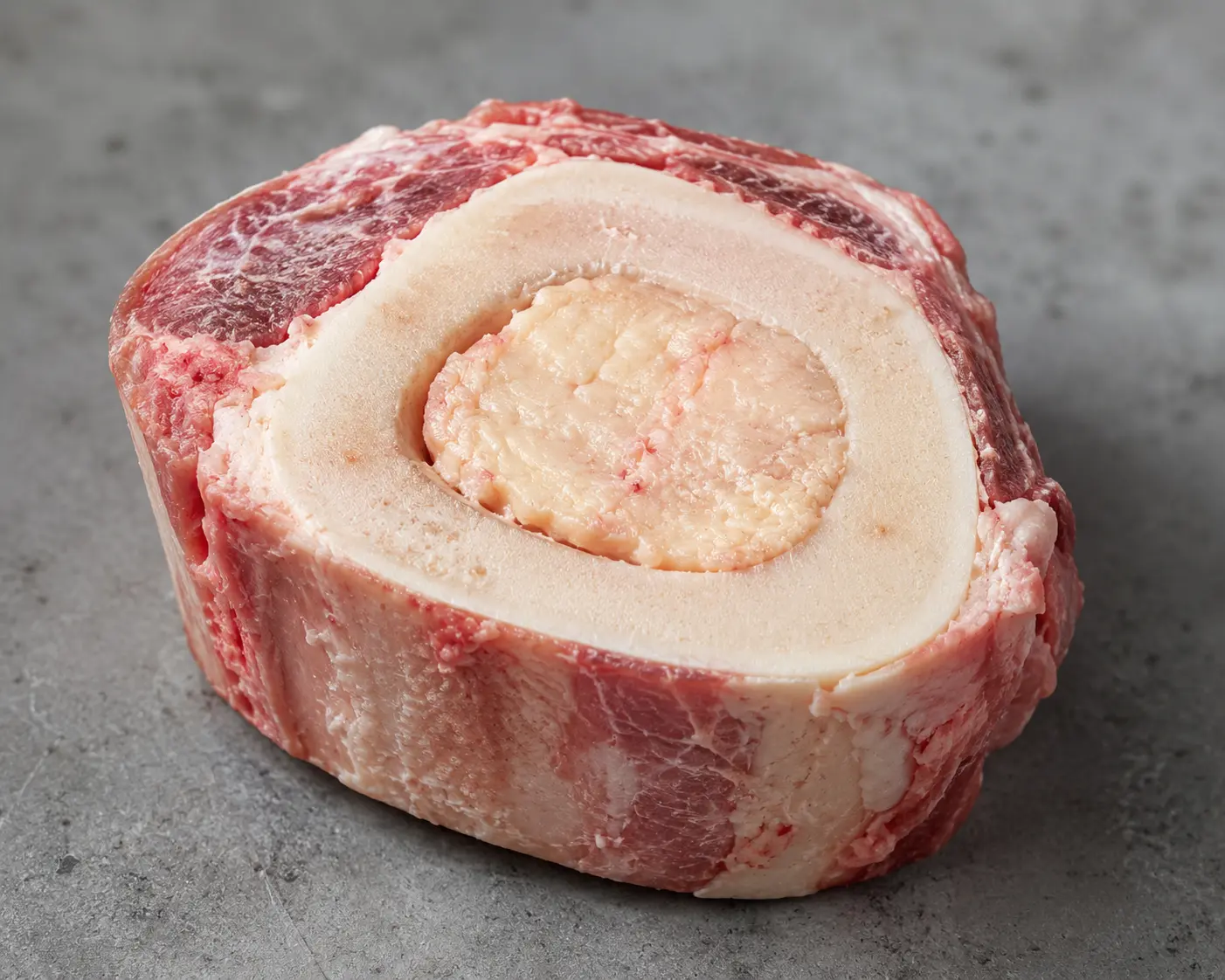
There are two types of bone marrow. Red marrow, found in flat bones such as the pelvis and sternum, is the primary site of blood cell production in adults. Yellow marrow, found in the hollow interior of long bones such as the femur, is composed predominantly of fat cells (adipocytes). It is yellow marrow that is consumed as food — the soft, fatty tissue that liquefies when roasted and is used in broths and stocks.
From a physiological standpoint, eating bone marrow does not directly interact with the marrow inside your own bones. The nutrients it provides — amino acids, fats, trace minerals — are absorbed, processed, and made available to the body’s tissues as raw materials. Whether those materials support bone health depends on whether the body is deficient in them and how they are used in the context of the broader diet and health status.
What bone marrow contains
A 100g serving of beef bone marrow contains approximately 780–850 kcal, 84g of fat, and 7g of protein. It is energy-dense and not a primary protein source. Its nutritional interest lies elsewhere.
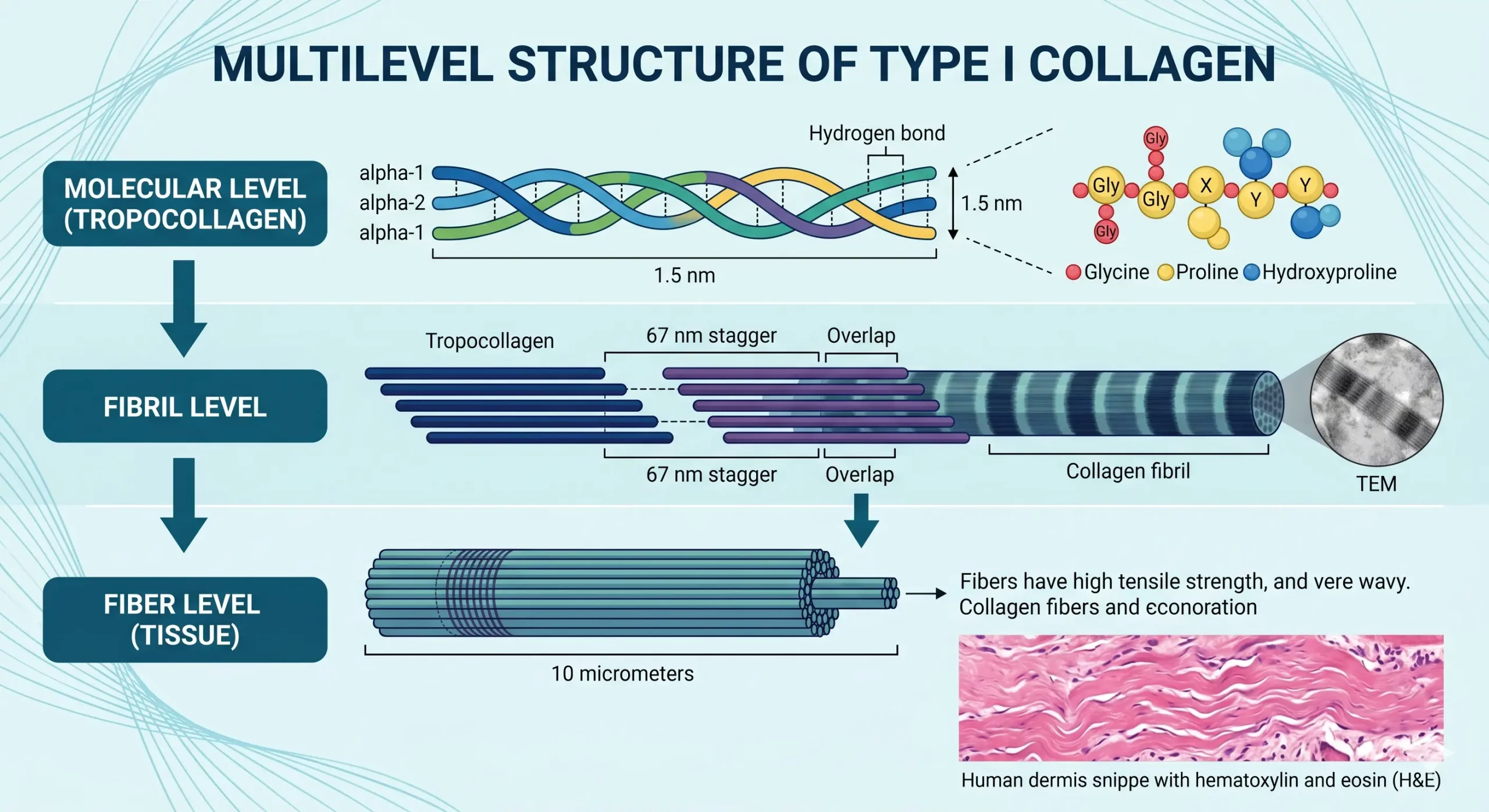
Glycine and proline. These are the dominant amino acids in marrow fat and connective tissue. They are the primary building blocks for collagen synthesis in the human body. Glycine is conditionally essential — the body produces some but dietary intake matters, particularly in older adults whose endogenous synthesis may be less efficient. Marrow is one of several whole-food sources of these amino acids alongside bone broth, slow-cooked meats, and skin-on poultry.
Glucosamine and chondroitin. These compounds are present in modest amounts in bone marrow and connective tissue. Both are found in human cartilage and are widely sold as supplements for joint health. The clinical evidence for supplemental glucosamine and chondroitin in osteoarthritis is mixed — some trials show modest benefit in pain reduction, others do not. Dietary intake through marrow and similar foods provides smaller amounts than therapeutic supplement doses, and the evidence for this route specifically is limited.
Adiponectin. Marrow adipose tissue contains adiponectin, a protein hormone involved in regulating bone metabolism. Research published in Endocrinology [1] has identified adiponectin’s role in suppressing osteoclast activity and supporting osteoblast mineralisation. This is a plausible mechanism, but the clinical relevance of adiponectin derived from dietary bone marrow — as distinct from the body’s own production — has not been established in human trials.
Vitamins and minerals. Marrow contains fat-soluble vitamins A, D, E and K, absorbed alongside the fat. Vitamin B12 is present in meaningful amounts, relevant to homocysteine regulation — elevated homocysteine is an independent risk factor for fracture. Iron, zinc, and phosphorus are also present.
The collagen connection
Collagen is the primary structural protein in bone, accounting for roughly 30% of bone mass. It forms the matrix on which calcium and phosphate mineralise. Declining collagen quality — not just declining mineral density — is a contributor to skeletal fragility in older adults.
Glycine and proline from dietary sources including bone marrow support the body’s own collagen synthesis. This is a well-established pathway. What the evidence does not support is the idea that eating marrow directly rebuilds or replenishes bone tissue in a targeted way. The amino acids enter general circulation and are distributed according to the body’s priorities. For patients whose overall protein and amino acid intake is adequate, the marginal benefit of marrow specifically is modest. For those whose diet is low in collagen-precursor amino acids — which is more common in heavily processed Western diets — whole-food sources including marrow are a reasonable way to address that gap.
This is a meaningful distinction from the way marrow is sometimes presented online, where the language implies a direct pipeline from the food to your skeleton. Bone health depends on assessed nutritional status, hormonal environment, mechanical loading, and where appropriate medical treatment — not on any single dietary addition.
Is bone marrow high in cholesterol?
Yes. Bone marrow is high in both cholesterol and saturated fat. A 100g serving contains significant amounts of dietary cholesterol alongside approximately 84g of total fat, of which a substantial portion is saturated.
The clinical significance of this for most people is less alarming than it might initially appear. Current evidence suggests that for the majority of healthy adults, dietary cholesterol has a smaller effect on serum LDL cholesterol than the saturated fat content of the diet as a whole. The effect is also highly individual — some people are cholesterol hyper-responders and others are not. Marrow also contains adiponectin, which has a role in lipid metabolism, and conjugated linoleic acid (CLA), which has demonstrated anti-inflammatory properties in research settings.
Practically, for patients who enjoy bone marrow as an occasional food, the cholesterol content is unlikely to be clinically significant in the context of an otherwise balanced diet. For patients with established hyperlipidaemia, familial hypercholesterolaemia, or cardiovascular disease, frequency of intake is worth discussing with their GP or cardiologist before making it a regular dietary feature. The NHS guidance on dietary cholesterol [2] provides a useful starting point.
What the evidence does not support
Bone marrow is nutritionally interesting. It is not a treatment for osteoporosis, and it should not be presented as one.
Population studies do not identify regular bone marrow consumption as a protective factor against fracture or as a meaningful modifier of bone mineral density. The nutrients it contains — glycine, collagen precursors, glucosamine — are available from a range of dietary sources, and there is no clinical signal that marrow specifically outperforms them. Patients who are concerned about osteoporosis symptoms or who have been told they have low bone density should not substitute dietary changes, including the addition of bone marrow, for clinical assessment.
The same caution applies to conflating marrow with medical treatments. Anabolic agents such as teriparatide, anti-resorptive medications such as bisphosphonates, and structured loading exercise programmes work through distinct physiological mechanisms. A dietary adjunct — however nutrient-dense — does not replicate those mechanisms. Patients at high fracture risk require a consultant-led assessment and where appropriate a formal treatment plan.
Bone marrow can be a sensible part of a protein-rich, nutrient-dense diet for patients who enjoy it. We sometimes discuss it in clinic as one of several whole-food sources of collagen-precursor amino acids, particularly for patients who are trying to increase dietary glycine and proline without relying solely on supplements. It is a supporting element, not a substitute for the core clinical pillars of bone health: structured loading exercise, hormonal assessment, vitamin D optimisation, and consultant-led monitoring on DXA over time. If you would like a personalised assessment of your bone health, including dietary factors, book a consultation or explore our care pathways.
Frequently asked questions
Is bone marrow high in cholesterol?
Yes, bone marrow is high in both cholesterol and saturated fat. For most healthy adults, occasional consumption is unlikely to have a meaningful impact on cardiovascular risk — dietary cholesterol affects serum LDL less significantly than total saturated fat intake. However, patients with hyperlipidaemia, familial hypercholesterolaemia, or established cardiovascular disease should discuss frequency of intake with their GP or cardiologist before making it a dietary staple.
Is bone marrow good for bone health and osteoporosis?
Bone marrow provides glycine, proline, and other nutrients relevant to collagen synthesis and musculoskeletal maintenance. However, population studies do not identify it as a protective factor against osteoporosis, and it is not a treatment for established bone loss. It can be a useful dietary addition within a broader nutritional approach, but it does not replace clinical assessment, loading exercise, or medical treatment where indicated. If you have concerns about your bone density, please book a consultation.
Can I take bone marrow supplements instead of eating it?
Freeze-dried bone marrow supplements are widely available. They provide the same amino acids and nutritional compounds as the food source in a more convenient form. The evidence base for bone marrow supplements specifically — as distinct from collagen peptide supplements or individual amino acid supplementation — is limited. If you are considering supplementation for bone health, a clinical assessment of your current nutritional status is a more informative starting point than self-prescribing a specific product.
Medically reviewed by Dr. Taher Mahmud, Consultant Rheumatologist and Co-Founder, London Osteoporosis Clinic. Dr. Mahmud has over 25 years of clinical experience in bone health and osteoporosis management.
This article is for informational purposes only and does not constitute medical advice. Always consult a qualified clinician before making significant changes to your diet, particularly if you have existing cardiovascular or metabolic conditions.
References:
[1] Kajimura D et al. Adiponectin and bone metabolism. Endocrinology, 2010. PubMed
[2] NHS. High cholesterol — foods to avoid. NHS.uk


Wonderful website. Lots of helpful information here. I¦m sending it to a few pals ans also sharing in delicious. And naturally, thanks to your sweat!