
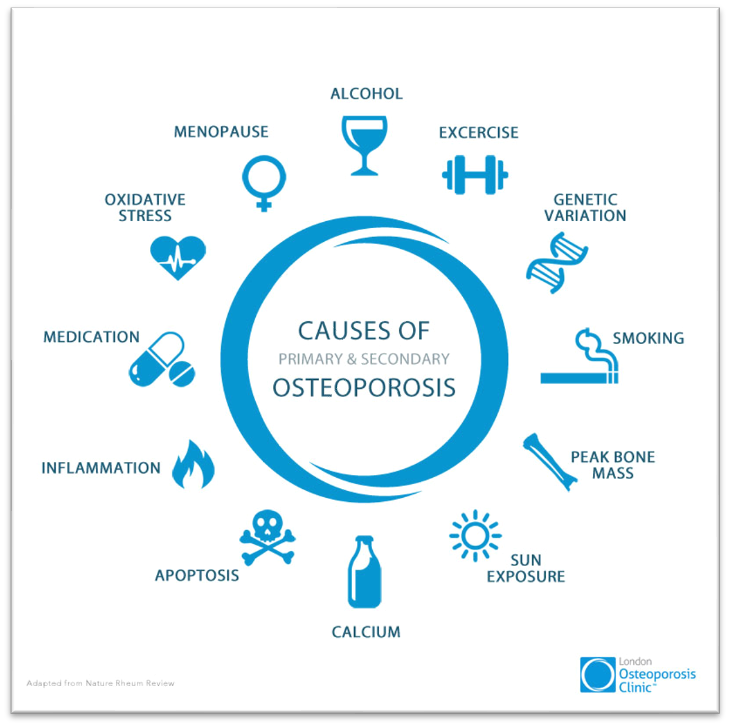
Osteoporosis is rarely well managed by a single intervention. While pharmacological treatment can play a role — particularly in the short term — it is not the cornerstone of the work. Understanding and addressing the underlying causes of bone fragility is what makes the difference between slowing the decline and actually changing the trajectory.
At the London Osteoporosis Clinic, the clinical pathway is reversal-first. The aim is to rebuild bone, where rebuilding is possible. Once gains have been achieved and measured on DXA, the next phase is consolidation — protecting those gains. Bisphosphonates sit at the end of that pathway, used selectively, and not as a default first treatment.
- Addressing the root causes of bone loss — nutritional, hormonal, lifestyle, secondary medical — is the foundation of effective osteoporosis management.
- The LOC pathway is reversal-first: rebuild bone where possible, then consolidate; bisphosphonates are used last, selectively, not as a default.
- Anabolic medications such as teriparatide actively build bone; anti-resorptive medications slow its loss — the distinction determines where each sits in the pathway.
- Holistic foundations (nutrition, exercise, hormonal balance) operate continuously alongside any pharmacological treatment and are not replaceable by medication.
The importance of identifying underlying causes
A structured approach to osteoporosis considers the full range of factors that contribute to bone health: nutrition, lifestyle, hormonal balance, and the biological environment in which bone is formed and lost. Medications — particularly those with anabolic effects — are used selectively to complement these foundations, providing a balanced and sustainable approach to treatment. They are not a substitute for addressing the causes of bone loss in the first place.
A holistic approach: targeting the root causes of bone fragility
Nutritional optimisation: Proper nutrition is foundational to bone health. Ensuring adequate calcium, vitamin D intake, and other essential nutrients supports bone formation and maintenance. Reducing or eliminating alcohol, smoking, and processed foods removes factors that can negatively impact bone density and the wider metabolic environment.
Exercise and physical therapy: Weight-bearing and resistance exercises are critical in stimulating bone formation and maintaining bone mass. Physical therapy can also help improve balance and strength, reducing the risk of falls and fractures. Mechanical loading is one of the most direct biological signals for bone formation and cannot be replicated pharmacologically.
Hormonal balance: Hormonal imbalances, particularly in postmenopausal women, can exacerbate bone loss. Addressing these imbalances through lifestyle changes or, where appropriate, hormone replacement therapy (HRT) is a practical component of osteoporosis management and can meaningfully slow the rate of bone loss at the menopausal transition.
Stress management and sleep: Chronic stress and poor sleep quality can negatively impact the hormonal and inflammatory environment in which bone is maintained. Mindfulness, relaxation techniques, and adequate sleep are not peripheral considerations — they are part of the biological conditions in which a treatment plan can succeed.
Understanding osteoporosis medications
Several medications are commonly used to treat osteoporosis, each with distinct mechanisms, benefits, and risk profiles. These medications can broadly be categorised into two types: anti-resorptive and anabolic.
Anti-resorptive medications
- Bisphosphonates (e.g., alendronate, risedronate): These drugs slow bone resorption, helping to maintain bone density. Long-term use can lead to diminishing returns and potential side effects including atypical femoral fractures and osteonecrosis of the jaw.
- Selective oestrogen receptor modulators (SERMs): Medications such as raloxifene mimic the effects of oestrogen in bones, reducing bone loss. They are generally well tolerated but carry an increased risk of thromboembolism.
- Denosumab: A monoclonal antibody that inhibits the development of osteoclasts. While effective, it requires careful management at discontinuation — abrupt cessation can produce rapid bone loss and vertebral fractures.
Anabolic medications
- Teriparatide (PTH 1-34): A synthetic fragment of parathyroid hormone that actively stimulates bone formation. It is one of the few treatments that builds bone rather than slowing its loss, and is central to the reversal-first phase of treatment in patients for whom it is appropriate. Typically used for up to two years, it is followed by a consolidation strategy.
- Romosozumab: A newer medication with both anabolic and anti-resorptive properties, used for short periods in patients at high fracture risk. Cardiovascular risk needs to be weighed in patient selection.
Advantages of anabolic medications: They actively stimulate new bone growth — crucial for patients with severe osteoporosis or recent fractures. Their time-limited use (typically up to two years) aligns with a structured pathway approach rather than indefinite prescription. Studies demonstrate significant reductions in vertebral and non-vertebral fracture risk.
Considerations: Anabolic treatments are often more expensive and may require secondary care access. Romosozumab carries cardiovascular risk that must be assessed. Following the anabolic phase, patients transition to an anti-resorptive agent to consolidate the bone density gained.
The most important shift in how we manage osteoporosis is the sequence. We no longer start with a bisphosphonate and add other things around it. We start with an honest assessment of why bone is being lost — nutritional, hormonal, secondary medical causes — address those systematically, and then determine where in the reversal-first pathway the patient sits. For some, rebuilding is achievable and is pursued first. For others, a different sequence applies. But the starting point is always the clinical picture, not the prescription. If you would like a consultant-led assessment or want to understand our structured pathways, our team is available to help.
Frequently Asked Questions
What are the most common root causes of osteoporosis?
The most common drivers include vitamin D deficiency, low dietary calcium and protein, oestrogen decline at menopause, physical inactivity, prolonged steroid use, and secondary conditions such as coeliac disease, hyperthyroidism, and malabsorption syndromes. Identifying which factors apply to a given patient is the starting point of a structured treatment plan — not the prescription of a drug.
Can osteoporosis be reversed, or only slowed?
Meaningful bone density gains are achievable in many patients, particularly when anabolic agents are used alongside nutritional and hormonal optimisation. The LOC reversal-first pathway is built on the clinical evidence that bone can be rebuilt — not merely preserved — in appropriate patients. Whether reversal is achievable in a specific case depends on the underlying causes, the degree of bone loss, and other clinical factors, which is why a structured assessment is the right starting point.
Do I need medication to treat osteoporosis?
Not necessarily, and not always immediately. Many cases of early or moderate bone loss can benefit substantially from addressing root causes — nutrition, hormonal status, loading exercise, secondary conditions — before any pharmacological treatment is introduced. Where medication is appropriate, the reversal-first pathway determines which type, in what sequence, and for how long. The decision is clinical and individual, not a default.
Medically reviewed by Dr. Taher Mahmud, Consultant Rheumatologist and Co-Founder, London Osteoporosis Clinic. Dr. Mahmud has over 25 years of clinical experience in bone health and osteoporosis management.
This article is for informational purposes only and does not constitute medical advice. Always consult a qualified clinician before starting, stopping, or changing any prescribed medication.
Pharmacological treatment for osteoporosis works best when it is one part of a wider clinical picture, not the whole of it. The reversal-first pathway makes that explicit: rebuild bone where possible, protect those gains, and use bisphosphonates last, if at all. For further assessment or personalised guidance, please visit www.LondonOsteoporosisClinic.com.

