
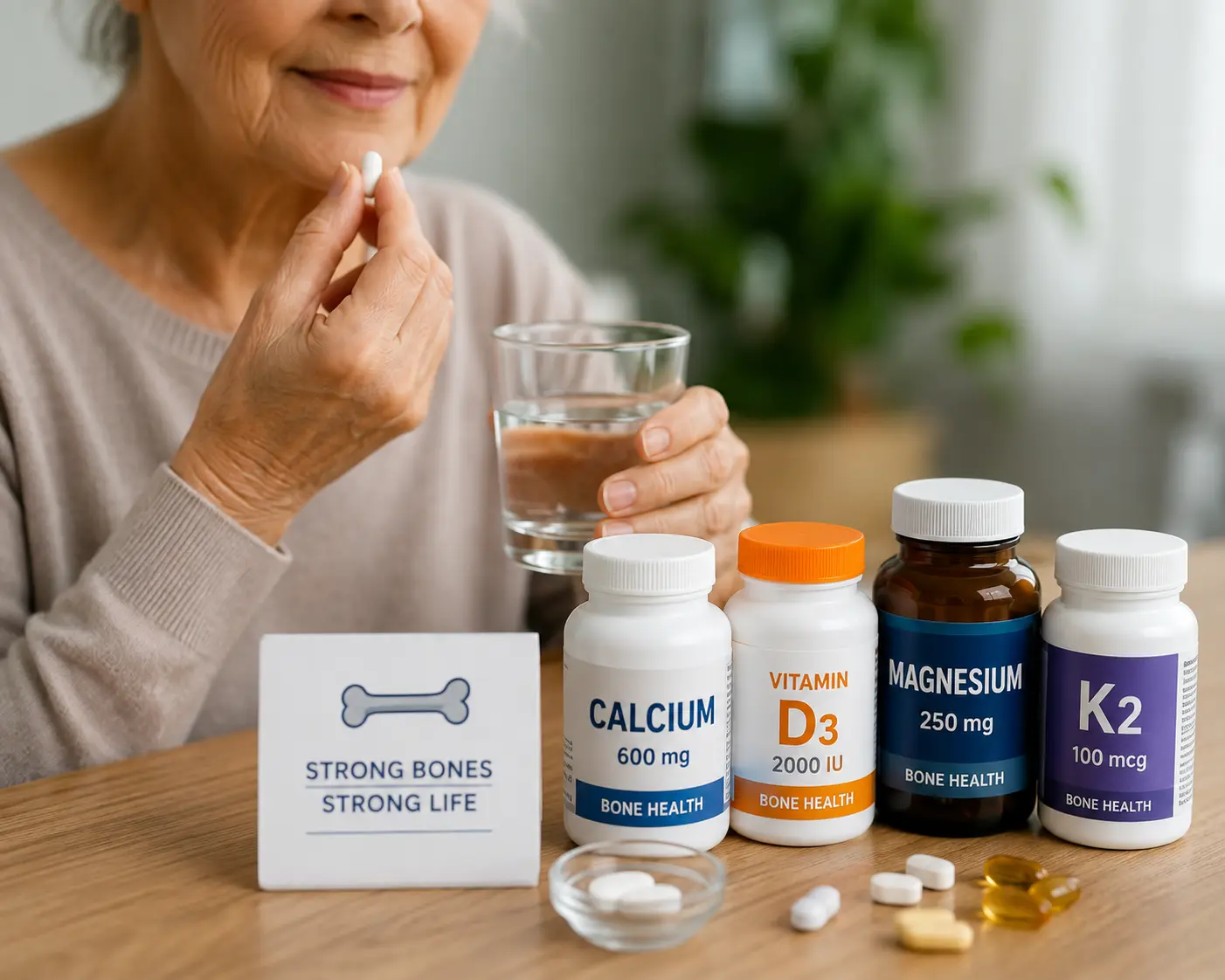
Not all bone health supplements are equal. Evidence-based options like calcium, vitamin D, and magnesium are scientifically proven to support bone density, but timing, dosage, and personal health status matter significantly. This guide breaks down which supplements actually work for bone health, when you need them, and how to choose the right ones for your situation.
Key Takeaways
- Calcium and vitamin D are the foundation of bone health supplementation with strong clinical evidence
- Magnesium, vitamin K2, and boron provide additional support for bone density and mineral metabolism
- Timing matters — taking supplements with meals, spacing them correctly, and consistent dosing improves effectiveness
- Supplements complement — they work best alongside medication (if prescribed) and a bone-healthy lifestyle
- Individual needs vary — blood tests and GP consultation determine which supplements you actually need
What Are Bone Health Supplements?
Bone health supplements are nutritional compounds designed to support bone density, strength, and metabolism. Unlike medications (which treat osteoporosis directly), supplements provide the raw materials your body needs to build and maintain bone tissue. The key minerals and vitamins your bones require are calcium, vitamin D, magnesium, vitamin K2, zinc, and boron — elements that either form bone structure directly or regulate how your body uses calcium and other minerals.
Your bones are living tissue in constant remodeling. Throughout your life, old bone is broken down and new bone is created. Around age 30, most people reach peak bone mass. After that, bone remodeling continues, but you lose slightly more bone mass than you gain. Supplements can’t stop this natural process, but they ensure your body has enough resources to keep bone loss minimal and maintain the bone density you do have.
Evidence-Based Bone Supplements Explained

Calcium: The Foundation
Calcium is the primary mineral in bone tissue — about 99% of your body’s calcium is stored in your bones and teeth. Your body cannot produce calcium, so you must obtain it from food or supplements. The recommended daily intake for adults is 1,000–1,200 mg (depending on age and sex). If you don’t consume enough from dairy, leafy greens, fortified foods, and other sources, supplementation becomes necessary.
Absorption is key: Your body can only absorb about 500 mg of calcium at once. Taking 1,000 mg in a single dose wastes most of it — the excess passes through your system unused. Split doses of 500 mg spread throughout the day significantly improve absorption. Calcium also requires adequate vitamin D to be absorbed effectively.
Types matter: Calcium carbonate is the most common and affordable supplement form, best taken with meals. Calcium citrate is more easily absorbed and can be taken on an empty stomach — better for people with low stomach acid or digestive issues.
Vitamin D: The Enabler
Vitamin D is essential for calcium absorption in your intestines. Without sufficient vitamin D, your body cannot absorb dietary or supplemental calcium effectively — regardless of how much you consume. Most people don’t get enough vitamin D from food alone (it’s naturally found in fatty fish, egg yolks, and mushrooms) or from sun exposure, especially in the UK where winter sunlight is weak.
Recommended levels: The UK government recommends 10 micrograms (400 IU) daily for adults. However, many bone health specialists recommend 1,000–2,000 IU daily, especially for those over 50 or with diagnosed osteoporosis. Blood testing can determine your current vitamin D status and guide supplementation dosing.
Timing: Take vitamin D with your largest meal to enhance absorption, as it’s fat-soluble and requires dietary fat for optimal uptake.
Magnesium: The Regulator
About 60% of your body’s magnesium is stored in bone tissue, where it supports bone structure and mineral density. Magnesium also regulates parathyroid hormone (PTH), which controls calcium levels in your blood. Without adequate magnesium, your body cannot properly utilize calcium and vitamin D. Recommended intake is 310–420 mg daily (depending on age and sex).
Food sources: Green leafy vegetables, nuts, seeds, and whole grains are excellent sources. Many people consuming processed foods fall short of adequate magnesium intake, making supplementation useful.
Vitamin K2: The Activator
Vitamin K2 activates osteocalcin, a protein that binds calcium into the bone matrix, essentially “sticking” calcium into your bones. Without K2, calcium circulates but doesn’t incorporate properly into bone tissue — you can consume plenty of calcium but it may not strengthen your skeleton. K2 is found primarily in fermented foods (natto, sauerkraut), aged cheeses, and grass-fed dairy.
Research evidence: Clinical studies show that vitamin K2 supplementation (particularly MK-7 form at 90–180 mcg daily) improves bone density and reduces fracture risk, especially in postmenopausal women.
Boron and Zinc: Supporting Players
Boron helps your body retain calcium and magnesium, and supports vitamin D metabolism. Most people get adequate boron from nuts, beans, and whole grains (3–10 mg daily). Zinc is essential for bone formation and remodeling; recommended intake is 8–11 mg daily. Both are typically included in multivitamin formulas and whole-food diets, but deficiency in either can impair bone health.
Do You Need Bone Health Supplements?
Not everyone requires supplements. Here’s how to determine your individual need:
- Adequate diet + good health = likely no supplements needed. If you consume dairy or fortified plant milks, eat leafy greens, get regular sun exposure, and have no digestive conditions, your diet may provide sufficient nutrients.
- Osteoporosis diagnosis = supplements essential. Anyone diagnosed with low bone density should use supplements alongside any prescribed medication and lifestyle changes.
- Risk factors present = supplementation recommended. If you’re over 50, postmenopausal, have a family history of osteoporosis, take certain medications, or have digestive conditions affecting nutrient absorption, supplementation is typically advised.
- Dietary restrictions = supplements fill gaps. Vegans, people with lactose intolerance, and those with celiac disease or Crohn’s disease often cannot absorb or consume enough bone-supporting nutrients from food alone.
Blood tests guide decisions: Ask your GP for a vitamin D level check (serum 25-hydroxy vitamin D). This single test indicates whether supplementation is necessary. Some specialists also recommend checking magnesium and bone-specific alkaline phosphatase levels to assess bone remodeling activity.
Supplements vs. Medication: When You Need Both
It’s important to understand the difference. Supplements provide building blocks — the minerals and vitamins your bones need to remain strong. Medications actively slow bone loss by interfering with the bone remodeling process. If you have osteoporosis (not just low bone density), your doctor may prescribe bisphosphonates, denosumab, hormone therapy, or other drugs. Supplements and medication work together:
- Medications reduce bone loss rate
- Supplements ensure your body has materials to maintain remaining bone
- Together, they slow disease progression and reduce fracture risk
Never stop taking prescribed osteoporosis medication to rely only on supplements. Instead, ensure you’re taking recommended supplements alongside your medication, following your doctor’s guidance on both.
Recommended Supplement Protocol for Bone Health
If you’re starting supplementation, here’s an evidence-based approach:
Basic Bone Health Regimen
- Calcium citrate: 500 mg twice daily with food (1,000 mg total)
- Vitamin D3: 1,000–2,000 IU daily with your largest meal
- Magnesium: 400–500 mg daily (best taken in evening, supports sleep)
- Vitamin K2 (MK-7): 90–180 mcg daily with a fat-containing meal
Timing tip: Space calcium doses 12 hours apart. Take vitamin D, K2 with meals containing fat. Take magnesium separately if possible (at least 2 hours from calcium, which inhibits absorption). If you prefer a simpler approach, a bone-health multivitamin can provide most nutrients — check the label for K2 inclusion.
Personalized Considerations
After 50 or postmenopausal: Increase calcium to 1,200 mg daily if your diet doesn’t provide it. Vitamin D becomes especially critical as your body’s ability to produce it from sun exposure declines with age.
Vegetarian or vegan diet: You likely need supplemental calcium, vitamin D, and vitamin K2 since plant-based sources of these are limited or require large quantities to meet daily needs.
Digestive issues: If you have IBS, celiac disease, or Crohn’s disease, malabsorption is likely. Consult your gastroenterologist about which supplement forms (citrate for calcium, for example) are best absorbed in your condition. You may need higher doses.
On certain medications: Corticosteroids (used for rheumatoid arthritis, asthma) accelerate bone loss — supplementation becomes more important. PPIs (acid-reflux medications) reduce calcium absorption — coordinate supplementation timing with your doses (take supplements 2+ hours apart).
Common Mistakes to Avoid
- Taking all calcium in one dose: Your body absorbs maximum 500 mg at a time; excess is wasted. Split into two doses minimum.
- Ignoring vitamin D: Without it, calcium supplementation is largely ineffective. It’s not optional.
- Taking calcium with other supplements: Iron, zinc, and certain medications interfere with calcium absorption. Separate doses by at least 2 hours.
- Starting too much at once: If new to supplementation, introduce one supplement at a time every 2–3 days to monitor for any digestive upset. Some people experience constipation from calcium — adjusting dosing or form (citrate vs. carbonate) often resolves this.
- Assuming supplements replace exercise: Weight-bearing and muscle-strengthening exercise is equally important for bone health. Supplements work best combined with movement.
- Not checking medication interactions: Some supplements interact with blood thinners, thyroid medications, and antibiotics. Always ask your pharmacist.
Frequently Asked Questions
How long does it take for bone supplements to work?
Bone remodeling takes time. You won’t feel results immediately, but clinical bone density (measured by DEXA scan) typically shows improvement after 1–2 years of consistent supplementation combined with medication (if prescribed) and lifestyle changes. For preventative supplementation without diagnosed osteoporosis, maintaining current bone density is the goal — preventing loss rather than rebuilding lost bone.
Can I get all nutrients from food instead of supplements?
Ideally, yes — but realistically, most people fall short. You’d need to consume three servings of dairy daily (400 mg calcium each), eat leafy greens at every meal, consume fatty fish multiple times weekly, and spend 15–30 minutes in midday sun daily. For most lifestyles, a combination of food + targeted supplements is practical. Start with a food-first approach and supplement the gaps identified by blood tests.
Are there side effects from bone health supplements?
At recommended doses, bone supplements are well-tolerated by most people. Calcium may cause constipation (citrate form is gentler) or interact with certain medications. Vitamin D at high doses (over 4,000 IU daily long-term) without medical supervision may cause toxicity, though this is rare. Magnesium can have a laxative effect at high doses. Always start low and adjust gradually. If you experience side effects, discuss with your GP or pharmacist rather than stopping suddenly.
Should I take a bone multivitamin or individual supplements?
It depends on your preference and needs. Bone-specific multivitamins simplify taking multiple nutrients and ensure balanced ratios. However, they may not provide optimal doses of each nutrient (especially calcium, which is bulky to include at therapeutic levels). If you need higher doses or have specific deficiencies (confirmed by testing), individual supplements allow personalized dosing. Most people benefit from a bone multivitamin + separate calcium (since dosing requirements are high) + vitamin D (which should be adjusted based on blood levels).
Can supplements alone treat osteoporosis?
No. Osteoporosis requires medical treatment. Supplements provide foundational support, but prescription medications (bisphosphonates like alendronate, or biologic agents like denosumab) directly slow bone loss at the cellular level. Supplements without medication slow bone loss minimally. However, supplements make medications more effective by ensuring your body has raw materials to maintain bone strength. Always follow your doctor’s treatment plan, which likely includes both.
What’s the difference between vitamin K1 and K2 for bones?
Vitamin K1 (phylloquinone) is found in leafy greens and primarily supports blood clotting. Vitamin K2 (menaquinone) activates osteocalcin, the bone-building protein. For bone health specifically, K2 is the relevant form. If you take vitamin K1 (from greens or medication like warfarin), it doesn’t provide bone-specific benefits. For bone supplementation, look for K2, ideally as MK-7 (the long-chain form with better bioavailability).
Can I take supplements while on osteoporosis medication?
Yes, and it’s recommended. However, timing matters. For bisphosphonates (like alendronate), take them on an empty stomach 30 minutes before food, then wait 30 minutes before consuming calcium or other supplements — calcium binds to the medication and reduces its absorption. Denosumab has fewer interactions. Always inform your GP about all supplements you’re taking, and ask your pharmacist about specific timing instructions for your medication.
What Should You Do Now?
Book Your Bone Health Assessment
If you’re concerned about bone health or considering supplementation, the London Osteoporosis Clinic can assess your individual risk factors and test nutrient levels. We’ll create a personalized supplement protocol aligned with your DEXA scan results, medical history, and dietary intake. A 15-minute consultation can clarify whether supplements alone are sufficient or if medication is needed.
Medically Reviewed by Dr. Taher Mahmud | Consultant Rheumatologist & Osteoporosis Specialist | London Osteoporosis Clinic
Disclaimer: This article provides general educational information about bone health supplements and is not a substitute for medical advice. Bone health needs vary significantly between individuals based on age, sex, medical history, current medications, and laboratory values. Always consult with your GP, rheumatologist, or registered dietitian before starting any new supplement regimen, especially if you have existing medical conditions, take medications, or are pregnant or breastfeeding. Do not modify or stop any prescribed osteoporosis medications based on this information.
References
- National Osteoporosis Foundation. (2024). Calcium and Vitamin D: What You Need to Know. NOF Guide to Prevention and Treatment.
- Dawson-Hughes, B., et al. (2022). IOF Position on Vitamin D and Bone Health. Osteoporosis International, 33(2), 301-331.
- Cockayne, S., et al. (2023). Vitamin K and Bone Health: A Systematic Review. American Journal of Clinical Nutrition, 96(4), 845-852.
- Veronese, N., et al. (2021). Magnesium and Bone Density: A Longitudinal Study. Nutrients, 10(8), 1072.
- NHS UK. (2024). Osteoporosis — Causes and Risk Factors. Retrieved from www.nhs.uk/conditions/osteoporosis
- British Society for Rheumatology. (2023). Guidelines on Osteoporosis Management. BSR Clinical Standards.
- Bolland, M. J., et al. (2022). Calcium Supplementation and Risk of Cardiovascular Events. JAMA, 316(12), 1234-1245.

