
A FRAX score estimates your chance of a hip fracture and a major osteoporotic fracture over the next ten years. It brings together clinical risk factors, with or without a suitable bone density measurement. The result helps guide a conversation about prevention and treatment; it is not a diagnosis, a certainty or the percentage of bone you have lost.
Key takeaways
- FRAX gives two probabilities. One is for hip fracture; the other covers a group of major osteoporotic fractures.
- Do not add the percentages together. Hip fractures are already included in the major-fracture category.
- A FRAX percentage and a DEXA T-score mean different things. One estimates fracture risk; the other compares measured bone density with a reference.
- Treatment thresholds need clinical interpretation. UK guidance considers age, the risk category, previous fractures and other circumstances.
- The calculator has limits. Recent fractures, falls, steroid dose and some illnesses may need additional assessment.
What is a normal FRAX score?
There is no single “normal” FRAX score. In the UK, your result is compared with age-specific thresholds set by the National Osteoporosis Guideline Group (NOGG). A result below the lower assessment threshold for your age is classed as low risk; results above the thresholds are classed as intermediate, high or very high risk. Because the thresholds rise with age up to 70, the same percentage can be reassuring at 80 but significant at 55.
If your report says “10-year fracture probability”, it is natural to wonder whether the number is high and what you should do about it. The most useful next step is to understand what was entered, which outcome is being estimated and how your clinician will use the result.
What does FRAX measure?
FRAX is a fracture-risk assessment tool. It estimates the ten-year probability of a hip fracture and of a major osteoporotic fracture using information about your health and risk factors. A major osteoporotic fracture in this context means a fracture at the hip, a clinically recognised spinal fracture, a forearm fracture or a fracture of the upper arm near the shoulder.
It does not estimate every type of broken bone. It also cannot tell you exactly when, where or whether you personally will fracture. Its role is to support clinical decisions about preventing fractures, not to forecast an individual event.
How should you read the percentages?
For illustration, a ten-year major-fracture probability of 10% means that, among 100 people with a comparable estimated risk, roughly ten would be expected to experience that outcome during the period. It does not mean a 10% loss of bone density or a 10% chance every year.

If a report also gives a hip-fracture probability of 3%, do not add it to the 10%. Hip fracture is already part of the major-fracture outcome. These example numbers explain how to read a report; they are not a personalised result or universal UK thresholds for treatment.
A lower number is generally more reassuring than a higher one, but the interpretation still depends on the person. A recent fracture or another important clinical factor may make action appropriate even when the headline number seems modest.
What information goes into the assessment?
The standard tool uses age, sex, height and weight, along with recognised risk factors. These include a previous fracture, a parent’s hip fracture, current smoking, oral glucocorticoid use, rheumatoid arthritis, selected causes of secondary osteoporosis and alcohol intake at the level specified by the tool.
It is important to use the tool’s definitions. Rheumatoid arthritis is not the same as osteoarthritis, for example, and the fracture-history question needs the right clinical interpretation. Your clinician should check medicine doses and the circumstances of any previous fracture rather than rely on a guessed answer.
FRAX has country-specific models because fracture rates and other population characteristics differ. The appropriate model can require additional judgement for someone who has moved between countries. NOGG’s risk-assessment guidance discusses these limitations.
Do you need a DEXA scan before FRAX?
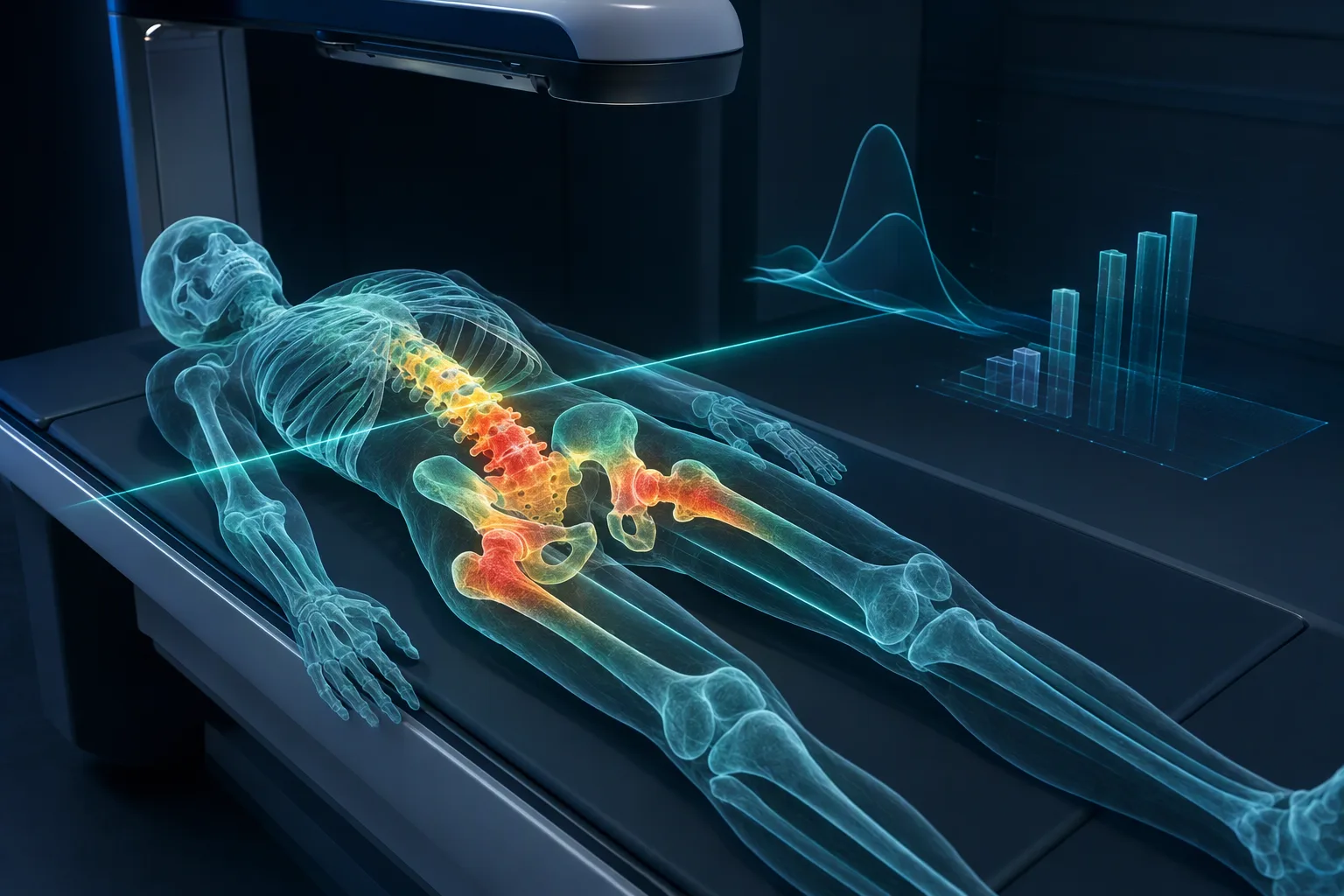
Not always. FRAX can be calculated using clinical information without a bone density measurement. The initial result may help a clinician decide whether a DEXA scan would clarify the next step.
When bone mineral density is included, standard FRAX uses an appropriate measurement from the femoral neck, a region near the top of the thigh bone. A lumbar-spine T-score should not simply be entered in its place. If the spine is substantially weaker than the hip, that difference may need separate consideration.
Our guide to DEXA results explains T-scores, Z-scores and differences between scan sites. For practical arrangements, see our DEXA assessment pathway in London.
What is a high FRAX score in the UK?
There is no single percentage that decides treatment for every adult. For postmenopausal women and men aged 50 and over, the NOGG guideline places a FRAX result into one of four risk categories. Up to age 70, the intervention threshold is set at the risk of a woman of the same age who has already had a fracture, so it rises with age; from 70 onwards fixed thresholds apply.
| NOGG risk category | Where the FRAX result sits | What usually happens next |
|---|---|---|
| Low | Below the lower assessment threshold for your age, with no previous fragility fracture | Reassurance and lifestyle advice: exercise, falls prevention, calcium, vitamin D and protein |
| Intermediate | Between the lower and upper assessment thresholds | A DEXA scan is recommended if practical, then FRAX is recalculated with the bone density result |
| High | Above the upper assessment threshold, or above the intervention threshold once bone density is included | Drug treatment is usually considered; a DEXA scan gives a baseline for later comparison |
| Very high | At least 60% above the intervention threshold, or a single strong risk factor (see below) | Referral to an osteoporosis specialist is advised; some people may need bone-building (anabolic) treatment first |
When bone density is included, NOGG uses the higher of the two results (major osteoporotic fracture or hip fracture) to decide the category. A previous fragility fracture is a reason to consider treatment in its own right, particularly in older people.
Signs of very high fracture risk
NOGG suggests considering specialist referral when any of these apply, even if the headline FRAX number looks moderate:
- a spinal (vertebral) fracture in the last two years
- two or more spinal fractures at any time
- a DEXA T-score of −3.5 or lower
- high-dose steroid treatment (7.5 mg a day or more of prednisolone, or equivalent, for three months or longer)
- several risk factors together, especially soon after a fragility fracture
Thresholds quoted from another country’s guidance should not be applied to a UK report. Ask which guidance your clinician used and which category you fall into.
What can a standard FRAX result miss?
A simple calculator cannot describe every feature of your health. Important details include how recently you fractured, whether you have had several fractures, how often you fall, the dose of oral steroids and conditions such as type 2 diabetes. Some risks are only represented in a simplified way in the standard calculation.
Clinicians can take these details into account and use appropriate adjustments or additional assessment. A reassuring-looking score should not be used to dismiss a suspected fracture, persistent new back pain, unexplained height loss or repeated falls.
FRAX is also not a direct test of whether your osteoporosis medicine is working. Monitoring treatment involves your fracture history, adherence, side effects and, when appropriate, comparable bone density measurements. Do not stop treatment because a self-calculated number looks lower.
Can you break a bone if your bone density is normal?
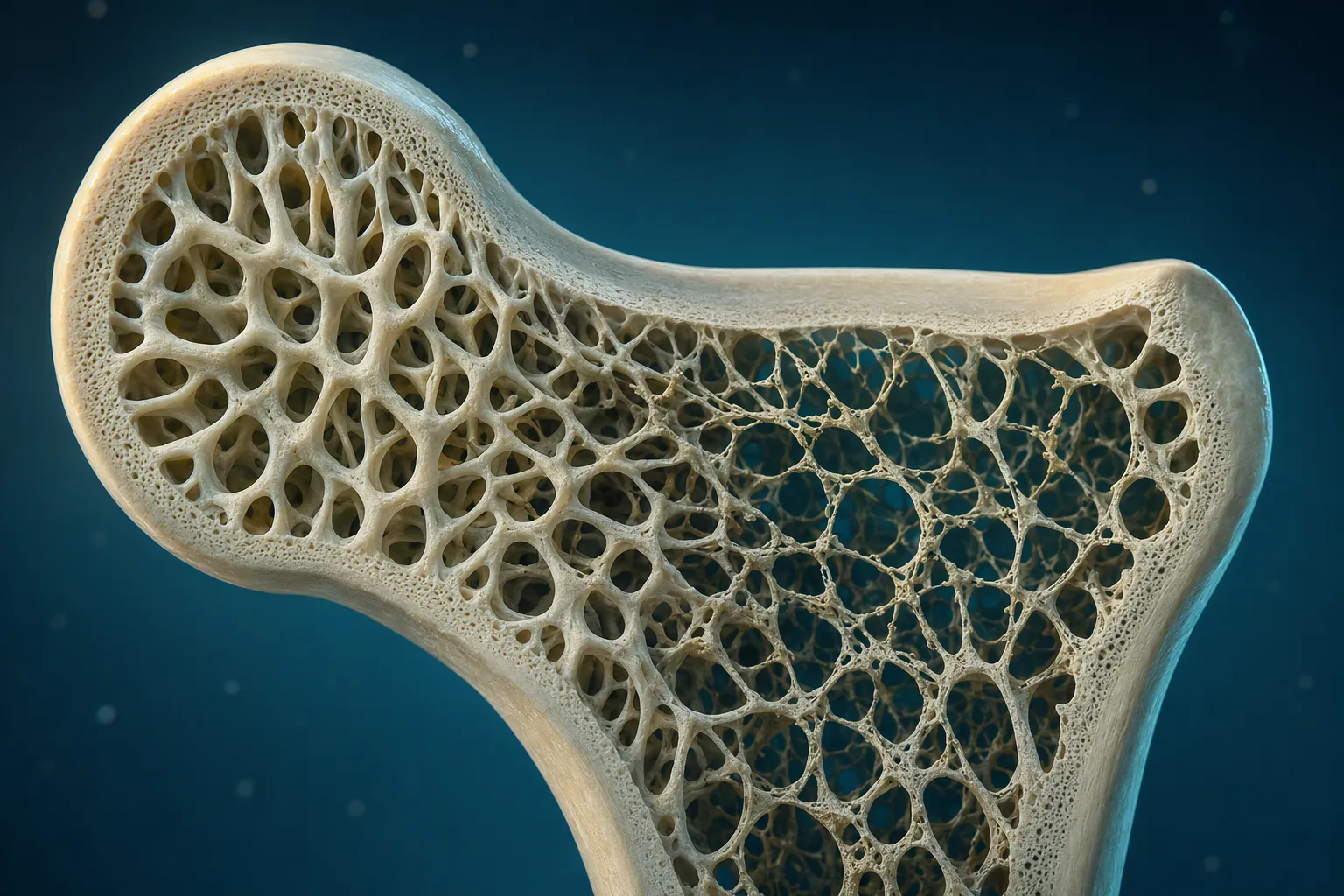
Yes. Bone density is only one part of bone strength. The internal structure of the bone, your age, falls and previous fractures all matter. In a large study of postmenopausal women, more than eight in ten of those who went on to fracture did not have a T-score in the osteoporosis range.
This is why FRAX combines clinical risk factors with bone density rather than relying on a T-score alone, and why a person with osteopenia can still be at high fracture risk.
How do you calculate your FRAX score?
The official FRAX tool, developed at the University of Sheffield, is free online. Choose the UK model and enter your age, sex, weight, height and the risk-factor answers. If you have had a DEXA scan, add the femoral neck bone density result. The NOGG website then shows where your result sits against the UK thresholds.
NICE guidance (CG146) recommends FRAX or QFracture to estimate fracture risk, and the Royal Osteoporosis Society has patient information on using the result. A self-calculated score is a starting point: ask a clinician to check the answers, especially about steroids, previous fractures and rheumatoid arthritis.
What should happen after you receive the score?
The assessment should lead to an understandable plan. That may involve exercise suited to your abilities, falls prevention, adequate nutrition, investigation for contributing conditions, medication or a decision about follow-up. The right combination depends on the overall assessment.
Bring previous scan reports, a current medication list and details of fractures or falls. Useful questions include:
- Were my fracture history, medicines and other risk factors entered correctly?
- Was bone density included, and would a DEXA scan change the recommendation?
- Which risk category am I in, and which guidance was used?
- Are there factors that the standard calculation does not fully reflect?
- What should I do now, and what would trigger an earlier review?
For people with low bone density but not a T-score in the osteoporosis range, our osteopenia treatment guide explains why the overall fracture risk can still influence treatment. Bone-density categories and fracture-risk categories answer different questions.
Frequently asked questions
What is a normal FRAX score?
There is no single normal score. UK clinicians compare your result with NOGG thresholds for your age; below the lower assessment threshold is classed as low risk.
How do I calculate my FRAX score?
Use the free official FRAX tool with the UK model, then check the result against the UK thresholds on the NOGG website. Ask a clinician to confirm the answers you entered.
Is a FRAX score the same as a T-score?
No. A T-score compares bone density with a young-adult reference. FRAX estimates ten-year fracture probabilities using clinical information, optionally with femoral-neck bone density.
Should I add the hip and major-fracture percentages?
No. Hip fractures are included in the major osteoporotic fracture category. Adding the figures would count overlapping outcomes.
Does a high result mean I will definitely break a bone?
No. It is an estimate, not a certainty. A higher probability is a reason to discuss measures that can reduce risk and whether treatment is appropriate.
Can I use my spine T-score in the calculator?
Standard FRAX uses an appropriate femoral-neck bone density measurement when BMD is included. Do not substitute the spine value. A clinician should assess important differences between the spine and hip separately.
Do I need to calculate FRAX every year?
Not automatically. Reassessment should have a clinical purpose. A new fracture, a significant medicine change or other altered risk factors can justify an earlier review; your clinician should agree the timing.
Turn the result into a bone-health plan
London Osteoporosis Clinic can assess your fracture risk alongside your medical history and scan results. Arrange a consultant assessment, explore osteoporosis treatment options or check the current fees.
For information only. This article provides general information and is not medical advice, a diagnosis or a treatment recommendation, and it does not replace advice from your own clinician. A clinician should interpret any fracture-risk estimate. Do not start, stop or change osteoporosis treatment based on this article or a self-calculated FRAX score, and seek clinical assessment for a suspected fracture or new concerning symptoms.
References and further reading
- National Osteoporosis Guideline Group. Fracture risk assessment and case finding; accessed 4 November 2026.
- National Osteoporosis Guideline Group. Intervention thresholds and strategy; accessed 4 November 2026.
- National Osteoporosis Guideline Group. Pharmacological treatment options; accessed 4 November 2026.
- National Institute for Health and Care Excellence. Osteoporosis: assessing the risk of fragility fracture (CG146).
- Siris ES, et al. Bone mineral density thresholds for pharmacological intervention to prevent fractures. Arch Intern Med. 2004. PMID 15159268.
- Royal Osteoporosis Society. Information and support.

