
Rod Stewart revealed his osteoporosis diagnosis publicly, joining a small but growing number of men willing to speak openly about a condition most people still associate exclusively with women. The reality is stark: one in five men over 50 will suffer an osteoporosis-related fracture in their lifetime — yet most are never screened, never warned, and never treated until after a serious injury has already occurred.
- Rod Stewart is among the few male celebrities to speak openly about an osteoporosis diagnosis — but the condition affects 1 in 5 men over 50.
- Men are far less likely to be screened or diagnosed until after a fracture — often a hip or vertebral collapse.
- Testosterone decline, prostate cancer treatment (ADT), and long-term steroid use are major, often overlooked, drivers of bone loss in men.
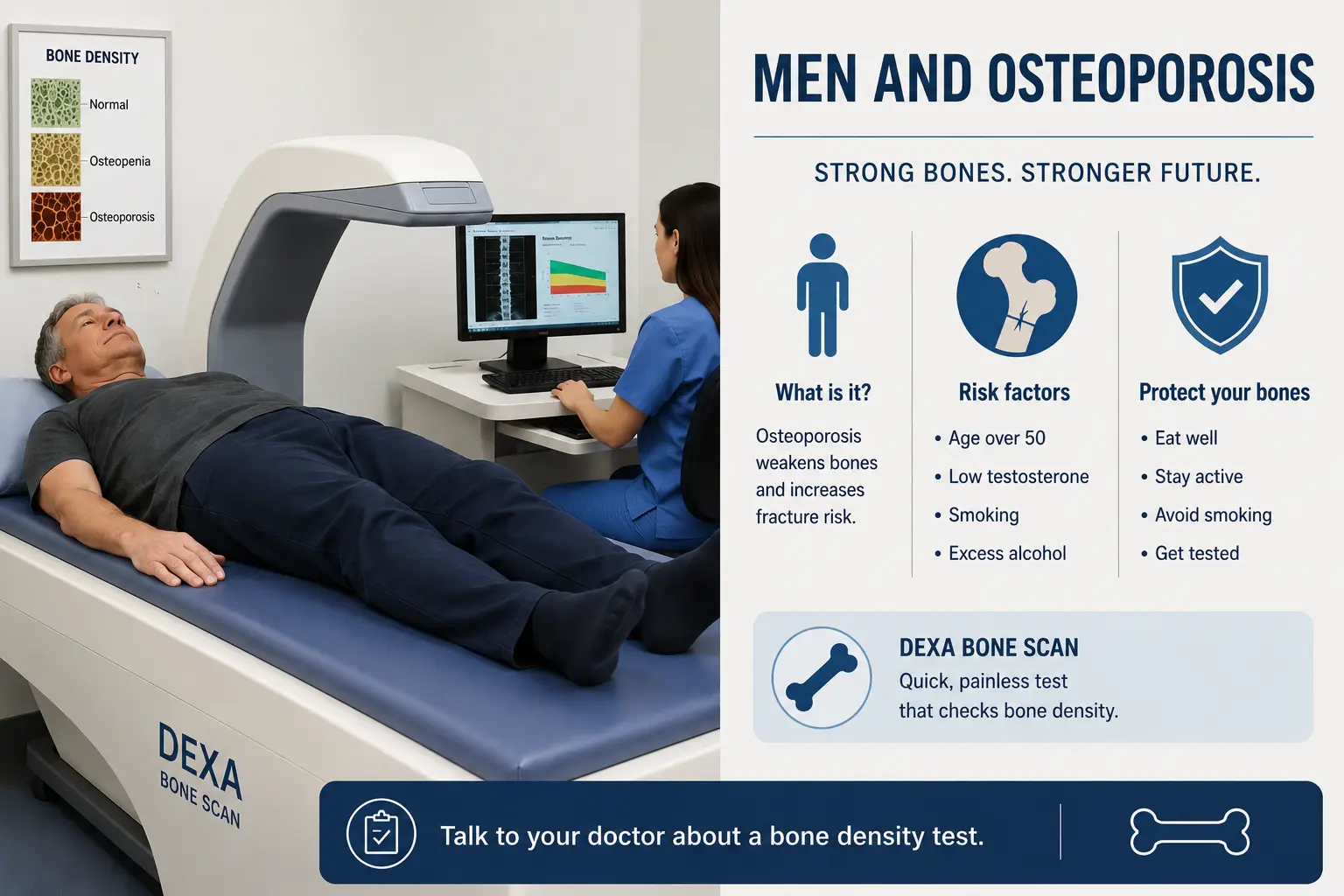
- A DEXA bone density scan takes 10 minutes and can identify risk years before a fracture occurs.
The Male Osteoporosis Blind Spot
Osteoporosis is overwhelmingly portrayed as a women’s disease — post-menopausal women in pharmaceutical adverts, mothers concerned about hip fractures, discussions centred on oestrogen decline. Men are largely absent from this conversation, both in media coverage and in routine clinical practice.
That absence is medically indefensible. In the UK, approximately 1.2 million men are estimated to have osteoporosis, according to the Royal Osteoporosis Society. Yet men wait longer for diagnosis, are less likely to be offered a bone density scan, and — most critically — are more likely to die following a hip fracture than women of the same age.
Male osteoporosis is not rare. It is under-recognised. And when high-profile figures like Rod Stewart disclose their diagnosis, it creates an opportunity to correct a dangerous public misconception.
Rod Stewart’s Diagnosis: What It Tells Us
Rod Stewart, in his late seventies and still performing at the highest level, disclosed his osteoporosis diagnosis in a manner consistent with his general approach to health — without excessive alarm, but with characteristic candour. Like many men diagnosed in later life, his bone loss was identified not through routine screening but during the investigation of an unrelated health concern.
His willingness to speak about it matters more than the disclosure itself. When men with a reputation for physical vitality and longevity — musicians, athletes, public figures — acknowledge bone disease, it disrupts the assumption that osteoporosis only happens to frail elderly women. It happens to rock stars. It happens to men who have spent decades on stage, in sport, or in physically demanding careers.
We have seen similar cultural moments with female celebrities: Gwyneth Paltrow’s osteopenia diagnosis brought bone health to a mainstream wellness audience; Sally Field’s Boniva campaign raised awareness of bisphosphonate treatment. For men, Rod Stewart’s disclosure could serve the same function — normalising both the diagnosis and the conversation.
Why Men Don’t Get Screened
The single biggest reason men are diagnosed late is that nobody thinks to look. Current NHS guidance for DEXA bone density scans is weighted heavily towards post-menopausal women. Men without obvious clinical risk factors — prolonged steroid use, rheumatoid arthritis, confirmed hypogonadism — are rarely referred for a bone density assessment.
Yet the risk factors that do apply to men are widespread and often unacknowledged:
- Age-related testosterone decline — testosterone has a directly protective effect on bone; declining levels from the mid-50s onwards accelerate bone loss in men, analogously to oestrogen decline in women at menopause
- Androgen deprivation therapy (ADT) for prostate cancer — among the most common cancer treatments in men, and one of the most reliable causes of rapid, measurable bone density loss
- Long-term corticosteroid use — prescribed for asthma, COPD, rheumatoid arthritis, inflammatory bowel disease and dozens of other chronic conditions
- Heavy alcohol use — directly toxic to bone-forming osteoblast cells and a compounding risk factor for falls
- Malabsorption conditions — coeliac disease, Crohn’s disease, and post-bariatric surgery all impair calcium and vitamin D absorption at the gut level
- Sedentary lifestyle — weight-bearing physical activity is essential for maintaining bone mineral density; prolonged inactivity accelerates loss at any age
The Fracture Risk Men Don’t Know About
Men who fracture a hip face a significantly worse prognosis than women with equivalent injuries. Research published in Osteoporosis International found 30-day mortality following hip fracture was approximately twice as high in men as in women [1]. The reasons are multifactorial: men tend to be older at first diagnosis, more likely to have undiagnosed comorbidities, and less likely to have been on preventive bone-protective medication prior to the fracture.
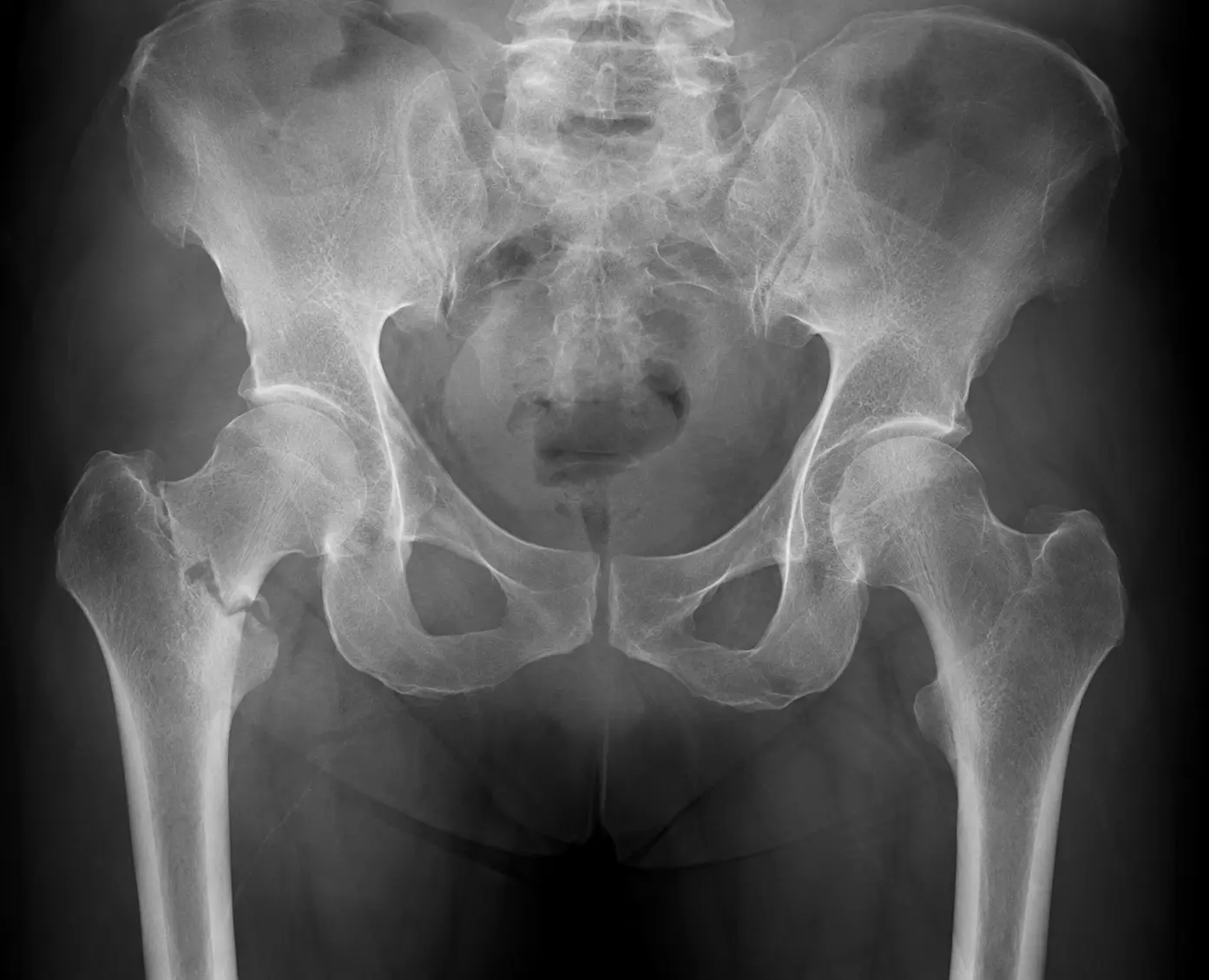
Men also frequently present with vertebral fractures that go undetected for months or years. These are painful, progressively disabling, and routinely dismissed as “back trouble” — particularly in men who attribute their pain to years of physical work, sport, or occupational strain. By the time imaging is performed, multiple vertebrae may already have collapsed, resulting in measurable height loss and permanent spinal deformity.
Prostate Cancer and Bone Health: A Connection Most Men Are Never Told About
Prostate cancer is the most common cancer in UK men, with over 52,000 new diagnoses annually. A substantial proportion of those men will be treated with androgen deprivation therapy — hormone treatment designed to suppress testosterone and deprive the cancer of its growth stimulus.
ADT works. It is also one of the most reliably destructive things you can do to bone health, causing measurable density loss of 2–4% per year in affected patients — a rate that rapidly pushes men into osteoporotic range. NICE guidelines now formally recommend baseline bone density assessment and monitoring throughout ADT treatment, with bone-protective medication prescribed where appropriate [2]. Implementation across NHS trusts remains inconsistent, and many men on active ADT are not receiving this protection.
For any man on androgen deprivation therapy, a conversation about bone health is not optional. It is a standard part of cancer management that is too often omitted.
What Treatment Looks Like for Men
The clinical good news is that osteoporosis in men responds to the same evidence-based treatments used in women — and the treatment decisions follow the same logic. A full range of osteoporosis treatments is available and effective in men.
Bisphosphonates
Alendronate (oral, weekly tablet) and zoledronic acid (intravenous annual infusion) are both licensed for male osteoporosis and represent the first-line pharmacological treatment in most cases. They inhibit osteoclast activity — slowing the rate at which bone tissue is broken down — and reduce fracture risk by approximately 50% in high-risk populations.
Denosumab
Available as a six-monthly subcutaneous injection, denosumab is particularly indicated in men receiving ADT for prostate cancer, where clinical trial data demonstrates significant vertebral fracture risk reduction. Unlike bisphosphonates, denosumab does not persist in bone after stopping — treatment cessation must be managed carefully to avoid rebound bone loss.
Testosterone Replacement
For men with confirmed hypogonadism — clinically low testosterone documented by blood testing — testosterone replacement therapy carries a meaningful bone-protective effect and addresses the underlying hormonal driver of bone loss. It is not, however, a treatment for osteoporosis in men with normal testosterone levels.
Exercise and Lifestyle
Weight-bearing and progressive resistance exercise remain the foundation of bone health across all ages and both sexes. For men already in the osteoporotic range, targeted supervised exercise programmes can both slow further bone loss and significantly reduce fall risk — itself the proximate cause of most fragility fractures. Calcium intake of 700–1,000mg daily and confirmed vitamin D sufficiency are baseline requirements for any treatment programme to work effectively. The relationship between collagen, calcium and bone density is more nuanced than most patients are told.
We see male osteoporosis in clinic every week, and almost without exception, the men who come to us have been symptomatic for years before anyone investigated their bone health. The turning point is usually a fracture: a wrist from a low-impact fall, a vertebral collapse during a sporting activity that should have been well within their capacity, a hip injury that should not have happened to a relatively fit man in his sixties.
Male bone disease is not biologically different from female bone disease. But it is treated as though it is less important, less common, less urgent. The statistics tell a different story. If you are male, over 50, and have never discussed your bone density with a clinician — that conversation is overdue. A DEXA scan is a 10-minute test that can change your prognosis entirely. Rod Stewart’s openness about his diagnosis is exactly the kind of cultural moment that encourages men to act before a fracture forces the issue.
When Should Men Get a Bone Density Scan?
There is no single agreed threshold in current UK guidance, but a pragmatic clinical approach — consistent with the framework used at London Osteoporosis Clinic — would recommend a DEXA scan for any man who:
- Is over 50 with one or more of the risk factors listed above
- Has been on systemic corticosteroids for three months or longer
- Is receiving or has completed androgen deprivation therapy for prostate cancer
- Has experienced a fracture following low-level impact (a fall from standing height or less)
- Has noticed unexplained loss of height or increasing spinal curvature
- Has a first-degree relative (parent, sibling) with a hip fracture history
Men who do not meet these criteria but are over 65 should discuss baseline bone density assessment with their GP as part of routine health review. Prevention is substantially cheaper — and less traumatic — than fracture management.
Frequently Asked Questions
Can men get osteoporosis?
Yes. Approximately 1.2 million men in the UK have osteoporosis, and one in five men over 50 will experience an osteoporosis-related fracture in their lifetime. Men are screened far less frequently than women, which means male osteoporosis is routinely diagnosed late — typically after a fracture has already occurred rather than in time to prevent it.
What are the symptoms of osteoporosis in men?
Osteoporosis itself produces no symptoms until a fracture occurs. Warning signs that significant bone loss may be present include unexplained back pain (which can indicate a silent vertebral fracture), measurable loss of height over time, a progressively stooped posture, or a fracture following a low-impact event — such as a fall from standing height. Any of these in a man over 50 warrants investigation including a bone density scan.
Should men on prostate cancer treatment have their bones monitored?
Yes — this is a formal clinical recommendation in UK guidelines. Androgen deprivation therapy (ADT), the standard hormonal treatment for prostate cancer, causes bone density loss of 2–4% per year in some patients. NICE recommends baseline DEXA assessment before or shortly after starting ADT, with regular monitoring throughout treatment, and prescription of bone-protective medication (typically a bisphosphonate or denosumab) for men with confirmed density loss. If your oncologist has not discussed this with you, raise it directly.
How do I get a DEXA scan as a man?
Your GP can refer you for an NHS DEXA scan if you have recognised risk factors for osteoporosis. Alternatively, you can self-refer for a private scan — London Osteoporosis Clinic offers DEXA scanning with same-week appointments and results reviewed by a consultant rheumatologist. The scan takes approximately 10 minutes, involves no injections or special preparation, and produces a clear T-score indicating whether your bone density falls into normal, osteopenic, or osteoporotic range.
Concerned about your bone health? A DEXA scan takes 10 minutes and could prevent a life-changing fracture.
Medically Reviewed by Dr. Taher Mahmud
Dr. Taher Mahmud is a Consultant Rheumatologist and co-founder of the London Osteoporosis Clinic. He has over 20 years of clinical experience diagnosing and treating osteoporosis in both men and women and is a recognised authority on bone health in the UK.
References
[1] Jiang HX et al. (2005). Development and initial validation of a risk score for predicting in-hospital and 1-year mortality in patients with hip fractures. Journal of Bone and Mineral Research. Available at: PubMed.
[2] National Institute for Health and Care Excellence (2014). Prostate cancer: diagnosis and management. NICE guideline NG131. Available at: nice.org.uk.
This article is for informational purposes only and does not constitute medical advice. Always consult a qualified healthcare professional before making decisions about your bone health or treatment options.

